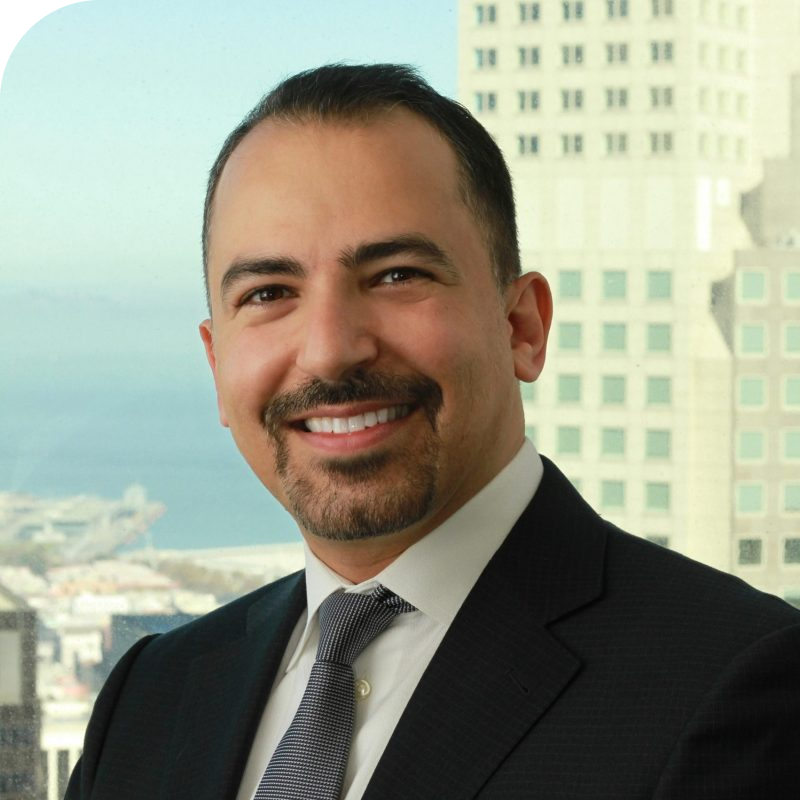
By Sami Sedghani, Pharm.D., J.D. · Synergist Law, P.C. · San Rafael, California · Updated October 24, 2026
This article provides general information only. It is not legal advice, and reading it does not create an attorney-client relationship. Every claim depends on its own facts and on the wording of the specific insurance policy.
If you were hit by an uninsured driver in California, or by one with too little insurance, the claim usually turns back toward your own policy. Uninsured motorist (UM) and underinsured motorist (UIM) coverage are both governed by one long statute, Insurance Code § 11580.2, which sets its own definitions, offsets, deadlines, and arbitration process.
The point people miss most often is that your own insurer becomes the party on the other side. It owes you coverage, but it evaluates and contests the claim the way any liability carrier would. I spent nine years at large law firms defending companies in complex and product liability cases, and I am a former clinical pharmacist. Below is how the statute works, and how that background shapes my preparation.
What makes a vehicle “uninsured” under California law
Under § 11580.2(b), a vehicle is uninsured if no bodily injury liability insurance or bond applied at the time of the crash. The definition also covers a vehicle whose insurer denies coverage or reserves rights, one whose insurer became insolvent within a year of the crash, an unidentified hit-and-run vehicle (subject to the rules below), and an “underinsured” vehicle.
Vehicles owned or operated by your household, and government-owned vehicles, are excluded. If a city or county vehicle hit you, UM is generally not the path, and a claim against a California public entity usually must be presented within six months under Government Code § 911.2.
How an underinsured motorist claim works in California
Under § 11580.2(p)(2), a vehicle is “underinsured” only if its liability limits are lower than the UM limits carried on the injured person’s vehicle. The comparison is limits to limits, not limits to your losses. For policies issued or renewed on or after January 1, 2025, California’s minimum bodily injury limits are $30,000 per person and $60,000 per accident (Vehicle Code § 16056). If the at-fault driver carries those minimums and so do you, that driver is not underinsured, however serious your injuries.
UIM is also not added on top of the other driver’s payment. Section 11580.2(p)(4) caps the UIM insurer’s exposure at your UIM limit minus the amount paid by or for anyone who may be legally liable, and subdivision (p)(5) gives the UIM insurer credit for what you received from the at-fault driver or that driver’s insurer.
Exhaustion and written consent come first
UIM coverage does not apply until the liability limits on all insured vehicles that caused the injury “have been exhausted by payment of judgments or settlements,” and proof of payment is submitted to your UIM insurer (§ 11580.2(p)(3)). Separately, § 11580.2(c)(3) says coverage does not apply if you settle with a person who may be legally liable without your insurer’s written consent. So the order matters: the at-fault insurer offers its limits, your UIM insurer is asked to consent in writing, and only then is a release signed. If you sue the underinsured driver, subdivision (p)(6) requires you to promptly send your UIM insurer the complaint.
Hit-and-run claims: physical contact and the 24-hour report
When the driver is never identified, § 11580.2(b) adds two conditions:
- Physical contact. The injury must arise out of physical contact between the unknown vehicle and you, or a vehicle you were occupying. A driver who forces you off the road without touching your car does not meet the statute’s terms.
- A report within 24 hours, then a sworn statement within 30 days. The crash must be reported within 24 hours to the police department of the city where it happened or, in unincorporated territory, to the sheriff or the local California Highway Patrol (CHP) headquarters. Within 30 days after that, you must file a statement under oath with your insurer setting out the facts of your claim against an unidentifiable driver.
Preserve the evidence of contact: paint transfer, photos taken before repairs, replaced parts, and dashcam or nearby business video, which can be recorded over if no one asks for it.
Reporting a hit-and-run in Marin County
The CHP Marin Area office, at 53 San Clemente Drive in Corte Madera, handles collisions on state highways in the county, including US-101, and on roads in unincorporated areas. City streets go to the local police agency. The statute names the city police department for crashes inside city limits, while CHP generally handles freeway collisions even where US-101 runs through a city, so after a freeway hit-and-run inside San Rafael or another Marin city, confirming the city police also have a timely report is a cautious step.
To get a CHP report later, a “party of interest,” which includes drivers, passengers, pedestrians, vehicle owners, legal representatives, and insurers with a valid claim or policy number, can request it through the CHP Crash Portal or submit form CHP 190 in person or by mail. CHP asks requesters to contact the Area office for the fee.
The deadlines that control a UM or UIM claim
Several clocks run at once, and some are shorter than the general two-year personal injury limit in Code of Civil Procedure § 335.1:
- 24 hours and 30 days: the hit-and-run report and sworn statement described above (§ 11580.2(b)(2)).
- 2 years from the crash: suit must be filed against the uninsured motorist, an agreement on the amount owed must be reached, or you must formally demand arbitration by written notice sent to the insurer by certified mail, return receipt requested. Otherwise no cause of action accrues under the coverage (§ 11580.2(i)(1)).
- 5 years from the arbitration demand: the arbitration must be concluded, subject to workers’ compensation and written-stipulation extensions (§ 11580.2(i)(2), (4)).
Settlement talks do not by themselves stop the two-year clock, although a court can excuse noncompliance in limited situations such as estoppel or waiver (§ 11580.2(i)(3)). The insurer must warn you in writing at least 30 days before a limitation period expires on a pending claim, but not once it has notice that you have a lawyer (§ 11580.2(k)).
UM and UIM disputes go to arbitration, not a jury
If you and your insurer disagree about whether you are legally entitled to recover, or how much, § 11580.2(f) requires arbitration before a single neutral arbitrator. The Civil Discovery Act applies, so both sides can take depositions and serve written discovery, and the hearing is treated as a trial for subpoena purposes. Discovery disputes go to a superior court where a bodily injury suit against the uninsured driver could be filed, or a county the policy names; for a Marin crash, that can be the Marin County Superior Court at 3501 Civic Center Drive in San Rafael.
Under subdivision (o), if you do not provide wage loss information or medical record releases within 15 days of a request, or attend an insurer-arranged medical examination within 20 days, the insurer can renew the demand, and continued noncompliance stays the arbitration.
Did you sign away your coverage? Rejections, lower limits, and stacking
Every auto bodily injury liability policy issued in California must include UM coverage, offered at limits equal to your liability limits, though insurers need not offer more than $30,000 per person and $60,000 per accident (§ 11580.2(a)(1), (m)). UIM is offered as part of the same coverage (§ 11580.2(n)). Deleting the coverage, or excluding a named driver, requires a signed agreement using the language in § 11580.2(a)(2), and lower limits require a written agreement under § 11580.2(a)(3). The election binds everyone on the policy and carries over to renewals. If an adjuster says you rejected UM, ask for the signed document and compare it to the statute.
California does not allow stacking: § 11580.2(q) bars combining limits across vehicles or policies, regardless of premiums paid. When more than one UM coverage applies, a policy may cap damages at the highest single limit and prorate (§ 11580.2(d)). And under § 11580.2(c)(2), the required coverage does not apply when you are hurt in someone else’s vehicle whose owner carries similar coverage; the owner’s UM is the starting point.
Who gets repaid from a UM recovery
- Med-pay. Under § 11580.2(e), a policy may reduce your UM recovery by medical payments coverage paid or owed.
- Medi-Cal. Welfare and Institutions Code § 14124.70 defines a “carrier” to include a UM insurer, and § 14124.71 lets the Department of Health Care Services recover the reasonable value of benefits from it. Under § 14124.76, no settlement is final until the department has notice and a chance to assert its lien, and recovery is limited to the portion representing medical expenses. The lien is reduced to reflect a share of attorney’s fees and costs (§ 14124.72(d)).
- Health plans. For plans licensed by the Department of Managed Health Care or the Department of Insurance, Civil Code § 3040 generally limits the lien to what the plan actually paid plus reasonable costs of perfecting it, caps it at one-third of the recovery when you have a lawyer, and makes it subject to a pro rata reduction for fees and costs. It does not apply to Medi-Cal or hospital liens, or to federally preempted employer plans.
- Workers’ compensation. If you were hurt while working, UM coverage cannot benefit the workers’ compensation carrier (§ 11580.2(c)(4)), the UM payment may be reduced by benefits paid and payable (§ 11580.2(h)(1)), and arbitration generally waits until your condition is “stationary and ratable” (§ 11580.2(f)).
Lien resolution often sets the pace at the end of a case; see why a California car accident settlement can take so long.
Uninsured motorist property damage is separate and narrower
Bodily injury UM does not cover damage to your car (§ 11580.2(c)(1)). That falls under Insurance Code § 11580.26, which insurers must offer on most non-commercial policies and which you can decline. If you have collision coverage, it pays your collision deductible; if not, it pays vehicle damage up to the lesser of actual cash value or $3,500, excluding loss of use. It requires actual, direct physical contact, and the uninsured driver or owner must be identified, or the vehicle identified by license plate, so an unidentified hit-and-run does not qualify. You must report the crash to your insurer within 10 business days, and a disputed claim requires arbitration started within one year of the crash.
How I prepare a UM or UIM claim
Your insurer evaluates a UM claim with the tools any liability insurer uses: prior records, treatment gaps, alternative explanations for symptoms, and the § 11580.2(o) examination. I spent years building those arguments for the defense, so I build the file expecting them:
- Collecting the declarations pages, any UM rejection or reduction forms, and every policy that might apply before drawing conclusions about limits.
- Calendaring the 24-hour, 30-day, and two-year deadlines from the first day, and sending any arbitration demand by certified mail, return receipt requested.
- Reading the medical records myself. As a former clinical pharmacist, I review medication histories, prescribing changes, and pre-existing conditions the way a defense medical reviewer will, and address them before the insurer raises them.
- Sequencing a UIM claim so written consent to settle and proof of exhaustion are in place before any release is signed.
None of this predicts any outcome; it is how I approach preparation. If you were recently hurt, our guide on what to do after a car accident that was not your fault in California covers the early steps, and you can read more about our car accident practice.
Frequently asked questions about UM and UIM claims in California
Does UM coverage apply if I was hit while walking or riding a bike?
It can. Under Insurance Code § 11580.2(b), when the named insured is an individual, “insured” includes the named insured, a spouse, and relatives living in the same household, whether they are occupants of a motor vehicle or otherwise. That language can reach pedestrians and cyclists. Policy terms and exclusions still apply.
What if the hit-and-run driver never touched my car?
California’s statute requires physical contact between the unknown vehicle and you, or a vehicle you were occupying, for a hit-and-run to qualify as an uninsured motor vehicle claim. A driver who causes a crash without making contact does not meet that requirement. Evidence of contact, such as paint transfer and photos taken before repairs, should be preserved early.
How long do I have to make an uninsured motorist claim in California?
Within two years of the crash, you must file suit against the uninsured motorist, reach an agreement with your insurer on the amount owed, or formally demand arbitration in writing sent by certified mail, return receipt requested. Hit-and-run claims have shorter steps: a police report within 24 hours and a sworn statement to your insurer within 30 days after that. Because the deadline depends on the facts, it is better to have a licensed California attorney determine the deadline that applies than to calculate it yourself.
Can I accept the at-fault driver’s policy limits before making a UIM claim?
The at-fault driver’s limits must be paid before UIM coverage applies, but you generally should not sign a release without your own insurer’s written consent. Under Insurance Code § 11580.2(c)(3), settling with a liable party without that consent can defeat the coverage. Notify your UIM insurer and obtain its written consent first.
Does Medi-Cal get repaid from a UM settlement?
Medi-Cal can assert a lien. Welfare and Institutions Code sections 14124.70 and 14124.71 allow the Department of Health Care Services to recover the reasonable value of benefits from an uninsured motorist carrier. Recovery is limited to the portion of the settlement or award that represents medical expenses, and the lien is reduced to reflect a share of attorney’s fees and costs.
Talk with an uninsured motorist lawyer in Marin County
If you were hurt by an uninsured, underinsured, or hit-and-run driver in Marin County or elsewhere in California and are looking for an uninsured motorist lawyer, Synergist Law, P.C. can review your policy and medical records with you and identify the deadlines that apply. I have been recognized by Super Lawyers (2022–2026) and served as appellate counsel in the published decision Osaze v. Gee (2026).
Call (415) 835-4448 or contact us online. Se habla español. Our office is at 1299 4th Street, Suite 301, San Rafael, CA 94901.
Contingency fee: no attorney’s fee unless we obtain a recovery for you. Depending on the terms of your written fee agreement, you may be responsible for case costs we advance even if there is no recovery. Your fee agreement explains this before representation begins.