
Serving Marin County and the greater San Francisco Bay Area from our San Rafael office. Synergist Law, P.C. is a boutique California personal injury firm led by Sami Sedghani, Pharm.D., J.D. — an accomplished trial attorney with clinical training. We represent people throughout California living with spinal cord injuries, from incomplete injuries with partial recovery potential to complete tetraplegia requiring lifelong attendant care.
What is a spinal cord injury?
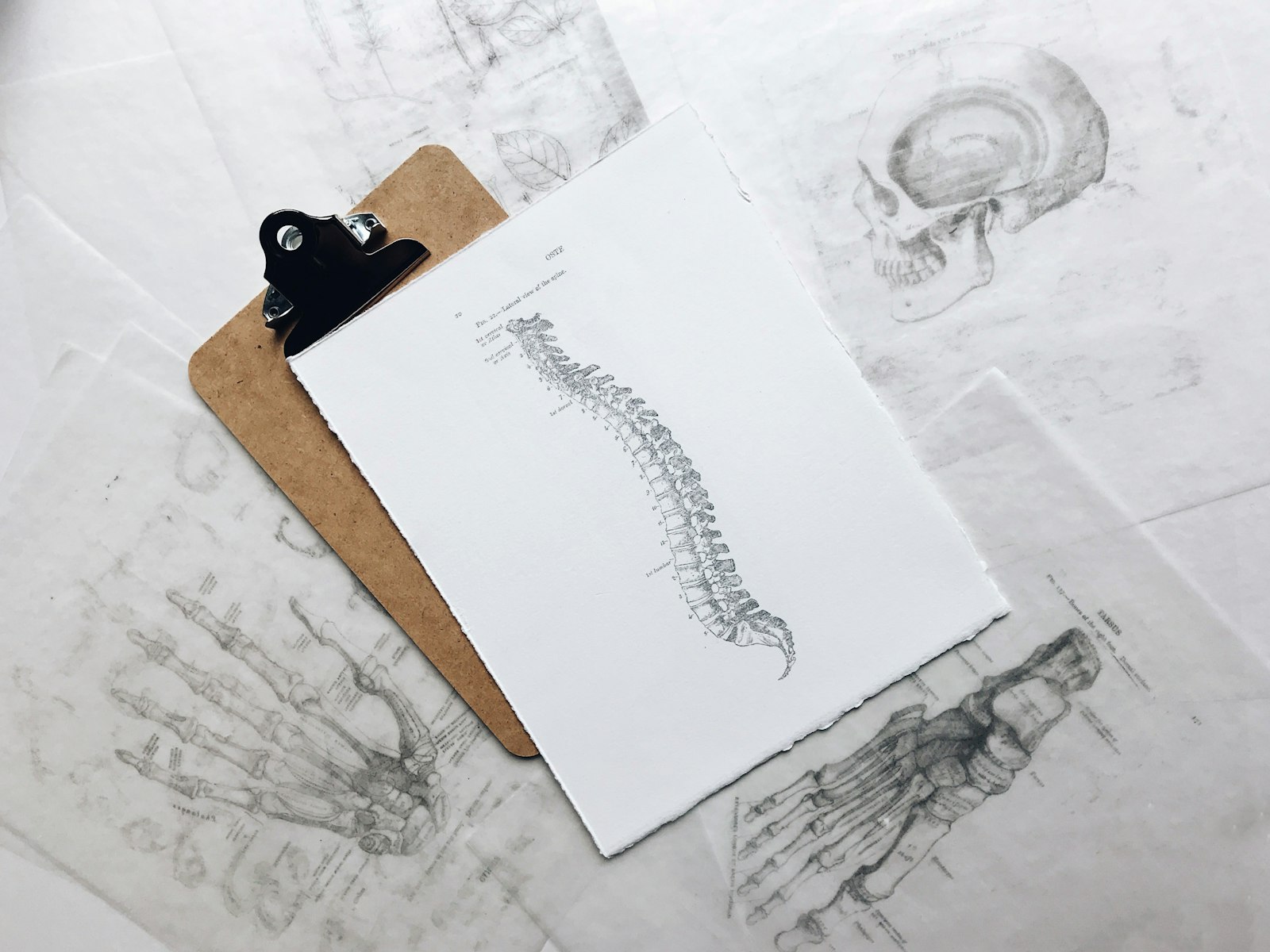
A spinal cord injury (SCI) is damage to any part of the spinal cord or the nerves at the end of the spinal canal (cauda equina). The injury disrupts the two-way signal highway between the brain and the body. The level of injury (which vertebrae) and the completeness of injury (how much motor and sensory function is preserved below the level) determine almost everything about prognosis, treatment, and the economic value of a case.
SCIs are classified using the American Spinal Injury Association (ASIA) Impairment Scale (AIS):
- AIS A — Complete: no motor or sensory function preserved in the sacral segments S4–S5.
- AIS B — Sensory Incomplete: sensory function preserved below the level, including sacral segments; no motor function below the level.
- AIS C — Motor Incomplete: motor function preserved below the level; more than half of key muscles below the level have a grade less than 3 (cannot move against gravity).
- AIS D — Motor Incomplete: motor function preserved below the level; at least half of key muscles below the level grade 3 or better.
- AIS E — Normal: motor and sensory function has returned to normal in a person who previously had deficits.
The ASIA exam is time-sensitive and operator-dependent. A sloppy initial exam at a community ER, uncorrected months later, can distort the entire damages picture. Early referral to a certified SCI center (in the Bay Area: Zuckerberg San Francisco General, Santa Clara Valley Medical Center / Rehabilitation Trauma Center, UCSF Fresno) is both clinically and medico-legally important.
Spinal cord injury levels explained
- Cervical (C1–C8) — tetraplegia / quadriplegia. Affects all four limbs. High cervical injuries (C1–C4) frequently require ventilator support or diaphragmatic pacing. Lifetime care costs are the highest in SCI medicine.
- Thoracic (T1–T12) — paraplegia with upper-limb preservation. Independent manual wheelchair users in most cases, with trunk control dependent on level.
- Lumbar (L1–L5) — lower extremity paresis. Many patients ambulate with braces or assistive devices. Bowel, bladder, and sexual function involvement are common.
- Sacral (S1–S5) and cauda equina. Lower limb weakness, saddle anesthesia, and bowel/bladder/sexual dysfunction. Cauda equina syndrome is a surgical emergency; a delayed diagnosis is a recurring medical-negligence pattern.
Common causes in Marin County and the Bay Area
- Motor vehicle collisions — high-speed impacts on US-101, I-580, I-80, Highway 37, and the Richmond–San Rafael Bridge; T-bones and rollovers that produce flexion-distraction and burst fractures.
- Motorcycle, bicycle, and e-bike crashes — direct spinal column impact from vehicle strikes and ground impacts.
- Falls from height — construction, roofing, scaffolding, and recreational falls (climbing, mountain biking on inadequately maintained trails).
- Diving and recreational water injuries — cervical burst fractures from shallow-water dives into unmarked or inadequately posted water.
- Premises falls and stair collapses — unmaintained property, missing handrails, defective stair treads.
- Sports and youth-league injuries — football, rugby, cheerleading, gymnastics, where inadequate supervision or defective equipment contributed.
- Medical and surgical complications — missed cauda equina, delayed decompression, epidural hematoma from anticoagulated patients, iatrogenic nerve injury during spine surgery.
What is a spinal cord injury case worth?
SCI cases are among the most financially consequential personal injury matters in California. Lifetime costs for a C1–C4 complete injury routinely exceed $5–$7 million in direct medical, equipment, home modification, and attendant care — before lost wages and non-economic damages. A properly built damages case includes:
- Life care plan — a formal, year-by-year projection of medical, rehabilitation, equipment (power wheelchairs, standing frames, ventilators, communication devices), home modification, vehicle modification, attendant care, and replacement cycles across the client’s expected lifetime, built by a credentialed life care planner.
- Economic analysis — present-value discounting of future costs, lost earnings, and lost earning capacity, prepared by a forensic economist.
- Neurological permanence opinions — neurology, physiatry, and in some cases neurosurgery, documenting the AIS grade, prognosis, and future-care needs.
- Pain and spasticity management. Neuropathic pain, autonomic dysreflexia, and spasticity (treated with baclofen pumps, botulinum toxin, gabapentinoids, or SCS) carry both quality-of-life and future-cost implications.
- Secondary complications. Pressure injuries, urinary tract infections, osteoporosis-related fragility fractures, deep venous thrombosis, and respiratory complications are predictable and must be captured in the life care plan.
- Loss of consortium, household services, and vocational-rehab modeling.
- Non-economic damages — loss of enjoyment of life, loss of independence, loss of bowel/bladder/sexual function, chronic pain, and the psychological burden of lifelong care dependence.
A Pharm.D.-trained lawyer reads the pharmacy record critically: baclofen and benzodiazepines for spasticity, gabapentinoids and tricyclics for neuropathic pain, opioid management, bowel and bladder regimens, bone-density management, and the interaction of all of these with the client’s functional baseline. Defense cross-examination routinely attacks whether “this many medications” are necessary; a clinically fluent plaintiff’s lawyer answers that in real time.
California law that potentially impacts your spinal cord injury case
- Statute of limitations. Personal-injury claims are generally governed by a two-year limitations period under Code of Civil Procedure § 335.1. Medical-negligence SCIs are governed by MICRA (one year from discovery / three-year outer limit under CCP § 340.5). Public-entity claims require a government claim within six months.
- Comparative fault. California uses pure comparative negligence (Li v. Yellow Cab Co. (1975) 13 Cal.3d 804). A diver who entered unmarked shallow water, a motorcyclist without a helmet, a worker who did not use available fall protection — all can still recover, with reduction proportional to their share of fault.
- Howell & Corenbaum. Past medical damages are capped at amounts actually paid or incurred under Howell v. Hamilton Meats (2011) 52 Cal.4th 541 and Corenbaum v. Lampkin (2013) 215 Cal.App.4th 1308 — a reality that disproportionately affects SCI cases with large unpaid billed charges.
- Future medical damages are projected at the reasonable value of care that will actually be needed — which is where the life care plan does most of its work.
- Prop 51 apportionment (Civ. Code § 1431.2) — non-economic damages are allocated among defendants in proportion to fault; economic damages remain joint and several.
- Loss of consortium — a spouse’s independent claim, often substantial in a serious SCI.
- Workers’ compensation. On-the-job SCIs trigger workers’ comp exclusivity against the employer, but third-party claims against general contractors, property owners, equipment manufacturers, and other actors on a jobsite often remain available in full. These are frequently the only path to full compensation.
- Medi-Cal, Medicare, and ERISA liens are near-universal in SCI cases and often negotiable. Lien resolution should be planned at the outset of the case, not at settlement.
Why choose Synergist Law for your spinal cord injury case
- Clinical fluency. Sami Sedghani holds a Doctor of Pharmacy in addition to his law degree. Spasticity regimens, neuropathic-pain pharmacology, bowel/bladder protocols, and the pharmacy record are read first-chair, not outsourced.
- Boutique attention. You will not be handed off to a case manager or junior associate. Sami personally works your file from intake through resolution.
- Local trial experience. We try cases in Marin, San Francisco, Alameda, Contra Costa, and Sonoma courts.
- Bilingual service. Fluent Spanish-language representation at every step.
- No attorney’s fee unless we recover. You may be responsible for advanced costs depending on your written fee agreement. Standard contingency representation on personal-injury SCI matters, with case costs advanced by the firm.
For a general explanation of how California claims like these are valued, and why no average can predict the outcome of a particular case, see What’s the Average Value of Spinal Cord Injury Claims in California?.
California spinal cord injury FAQ
My loved one was told the injury is “incomplete.” What does that mean for the case?
“Incomplete” means some motor or sensory function below the level of injury is preserved. Prognosis varies significantly — AIS B through AIS D cover a huge functional range. Case value depends on the final ASIA grade at maximum medical improvement (typically 12–24 months), not the ER-day exam. Settlement before MMI is almost always premature.
The accident was partly my family member’s fault. Can we still bring a case?
Yes. California applies pure comparative negligence. The jury can assign a percentage of fault to the injured person and the recovery is reduced by that percentage — but it is not eliminated, even if that share is substantial. SCI cases often have real liability on both sides and are still worth significant recoveries.
What is a California SCI case worth?
There is no bracket. Value depends on level and completeness (ASIA grade), age and pre-injury trajectory, liability strength, available insurance and defendants, venue, and the quality of the life care plan and economic analysis. Lifetime costs for high cervical injuries can exceed $7 million before non-economic damages. We do not quote numbers before reviewing the file.
The injury happened at work. Why do I need a personal-injury lawyer in addition to workers’ comp?
Because workers’ compensation is almost never a full recovery for a catastrophic SCI. The real money in on-the-job SCIs typically sits in a third-party claim against a general contractor, a property owner, an equipment manufacturer, or another entity on the jobsite that is not your employer. These claims proceed in civil court and are not barred by workers’ comp exclusivity.
How long do I have to file an SCI lawsuit in California?
Generally two years from injury under CCP § 335.1. Medical-negligence SCIs are governed by MICRA (CCP § 340.5). Government-entity cases require a formal government claim within six months. Minors and certain discovery-rule situations have different clocks. Because the deadline depends on the facts, it is better to have a licensed California attorney determine the deadline that applies than to calculate it yourself.
What is cauda equina syndrome, and why is a delayed diagnosis so often litigated?
Cauda equina syndrome is a compression of the nerve roots at the base of the spinal cord, usually from a large disc herniation, hematoma, abscess, or tumor. It presents with new bowel/bladder dysfunction, saddle anesthesia, bilateral leg weakness, and sexual dysfunction. It is a surgical emergency; prompt decompression (typically within 24–48 hours of onset of bowel/bladder symptoms) is the standard of care. Delayed diagnosis in an ER or primary-care setting is one of the most consequential missed diagnoses in medicine and a recurring medical-negligence claim.
What about Medi-Cal, Medicare, and insurance liens?
Nearly every SCI case has substantial liens on the recovery. Medi-Cal (Welf. & Inst. Code § 14124.70 et seq.), Medicare, Tricare, and ERISA plans all have reimbursement rights — and they are often negotiable. Lien resolution planning starts at the beginning of the case, not at settlement, because what you negotiate on the back end determines how much actually reaches the client.
How does Sami’s Pharm.D. help an SCI case?
SCI patients run complex medication lists — baclofen (oral and intrathecal), tizanidine, gabapentin, pregabalin, duloxetine, opioids, bowel and bladder regimens, bone-density agents, DVT prophylaxis. Defense experts routinely challenge whether the regimen is reasonable, necessary, and causally connected to the injury. A lawyer who reads the medication list clinically can prepare treating physicians and retained experts to meet that cross-examination, and can model future pharmacy costs with real accuracy in the life care plan.
Talk to a Marin County spinal cord injury lawyer today
If you or a loved one has suffered a spinal cord injury — whether an incomplete injury with recovery potential or a complete injury that will require lifelong care — Synergist Law, P.C. offers a free, confidential consultation. Call (415) 835-4448 or contact us online. Serving Marin County, the Bay Area, and all of California.
Attorney Advertising. The information on this page is for general informational purposes only and does not constitute legal or medical advice. Reading this page, contacting the firm, or submitting a case inquiry does not create an attorney–client relationship. Past results do not guarantee a similar outcome. Every case is different; prognosis, treatment, and settlement value depend on facts specific to the individual client. For advice about your situation, consult a licensed California attorney.