
By Sami Sedghani, Pharm.D., J.D. · Synergist Law, P.C. · San Rafael, California · Updated October 29, 2026
This page provides general information about California law and local procedures as they apply to injuries in San Jose. It is not legal advice, and reading it does not create an attorney-client relationship. Every case depends on its own facts. For advice about your specific situation, consult a licensed California attorney.
This page explains what a San Jose car accident lawyer or truck accident lawyer looks at first after a crash in the city. San Jose is the largest city in Santa Clara County, and US-101, I-280, I-680, I-880, State Route 87, and State Route 85 all run through it. After a crash there, the first practical questions are local ones. Did San Jose police or the CHP take the report? Is the street one the City has already named a Priority Safety Corridor? Is the City, the County, VTA, Caltrain, or the State involved? Those answers decide who you file against and which deadline applies.
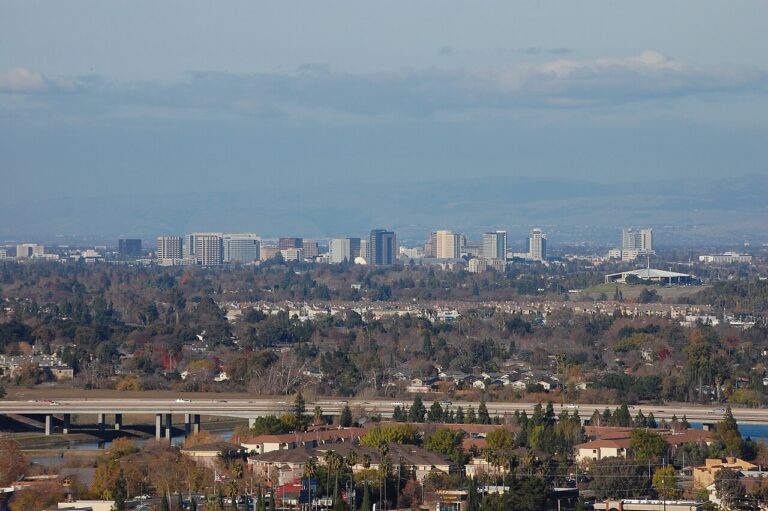
Photo: Eugene Zelenko, CC BY-SA 4.0, via Wikimedia Commons.

Synergist Law is led by attorney Sami Sedghani, a personal injury lawyer. Our office is in downtown San Rafael on 4th Street. We work with San Jose clients by phone and video, and in person when a case calls for it. For the general California rules, see our pages on car accidents, truck accidents, and commercial vehicle accidents.
What San Jose’s own crash data shows
San José adopted a Vision Zero goal in 2015. On February 25, 2025, the City Council adopted the 2025 Vision Zero Action Plan. It aims to cut traffic deaths and severe injuries by 30 percent by 2030 and to eliminate them by 2040. The City’s Vision Zero Task Force has described the toll as roughly 50 traffic deaths and 220 severe injuries a year.
| Year | Traffic deaths in San Jose | Severe injuries |
|---|---|---|
| 2019 | 60 | 210 |
| 2020 | 49 | 231 |
| 2021 | 60 | 236 |
| 2022 | 65 | 191 |
| 2023 | 49 | 214 |
What are San Jose’s Priority Safety Corridors?
Priority Safety Corridors are the streets where San José’s fatal and severe crashes concentrate. According to the City’s June 2024 Vision Zero Task Force presentation, the 2023 corridor map covers 30 streets, about 6 percent of the city’s roadways and 150 centerline miles. Those 30 streets accounted for 46 percent of fatal and severe injuries from 2017 through 2021.
The City has rebuilt segments of Priority Safety Corridors with quick-build safety projects, including Senter Road from Tully Road to Monterey Road and Hillsdale Avenue from Almaden Expressway to Ross Avenue. In 2023, 31 of the city’s 49 traffic deaths (63 percent) happened on Priority Safety Corridors, according to the February 2024 Task Force minutes. Through November 30, 2024, the share was 21 of 46, according to the City’s December 2024 Task Force presentation.
Most deaths happen on major roads posted at 35 mph or higher: 42 of 49 in 2023, and 37 of 46 through November 30, 2024, according to the December 2024 presentation. Many happen after dark: 32 of the 49 deaths in 2023.
People walking, biking, and riding motorcycles
Pedestrians are the largest group of people killed on San Jose streets. In 2023, 27 of the 49 people killed (55 percent) were walking. Through November 30, 2024, pedestrians were 19 of 46 deaths (41 percent), the largest share of any street user, according to the December 2024 presentation. For a San Jose pedestrian accident lawyer, the lighting and the posted speed often matter as much as the driver’s account.
Bicycle deaths rose in 2024. The City’s October 2024 Task Force presentation counted 8 people killed on bikes from January 1 through September 30, 2024, compared with 3 in the same period of 2023 and 6 in 2022. Motorcyclist deaths for the same periods were 5, 4, and 7. A San Jose bicycle accident lawyer or San Jose motorcycle accident lawyer looks at the same report, signal timing, and street video. See our pages on bicycle accidents and motorcycle accidents.
What the data can and cannot do in a claim
Most crashes trace back to a driver and that driver’s insurance. When the road itself contributed, such as a poorly lit crossing, Government Code § 835 allows a claim against the public entity for a dangerous condition of its property. Along with showing the condition was dangerous and caused the injury, the injured person generally has to show the entity created the condition or had actual or constructive notice of it in time to protect against it.
A corridor listing does not prove a dangerous condition, and public entities have defenses, including design immunity under Government Code § 830.6. Some safety data also has limits as evidence. Under 23 U.S.C. § 407, certain reports and data compiled for federal highway safety programs cannot be discovered or admitted in a damages case about that location. Whether a document is covered is for the court to decide. The data’s practical value is pointing to records worth requesting early, such as signal timing and work orders.
The first two weeks: what a San Jose car accident lawyer looks at
The City’s 2025 Vision Zero Action Plan names speeding, unsafe turning, and red-light running as the three violations most linked to severe and fatal crashes in San Jose. Whether you call a San Jose car accident attorney or handle the first steps yourself, the first two weeks shape a claim more than people expect:
- The first medical record. Early care, and a first note that describes exactly how the crash happened, carry weight. Insurers point to gaps between the crash and the first visit to argue that the injury came from something else.
- The DMV report. If anyone was injured, or property damage exceeded $1,000, each driver must file an SR-1 report with the DMV within 10 days (Vehicle Code § 16000), whether or not police wrote a report.
- Recorded statements. The other driver’s insurer may call quickly and ask for a recorded statement. That insurer is gathering evidence for its own insured. Hold off on recorded statements until you consult with a licensed attorney.
- Your own coverage. Medical payments coverage can pay bills regardless of fault, and so can uninsured or underinsured motorist coverage when the other driver has little or none.
- Shared fault. Under California’s comparative fault rule, a share of fault generally reduces a recovery rather than barring it. California generally bars pain-and-suffering damages for uninsured drivers and owners, and for drivers convicted of DUI in that crash, with some exceptions (Civil Code § 3333.4).
- Vehicles and video. Photographs of the vehicles before repair, the damaged parts if the shop will release them, and any business cameras facing the intersection can all become evidence. Video is often overwritten within days.
Who takes the report after a San Jose crash?
On city streets, the San Jose Police Department takes collision reports, and its Records Unit at 201 West Mission Street releases them. On the freeways, the responding agency is the California Highway Patrol’s San Jose Area office at 2020 Junction Avenue. According to its page, CHP San Jose patrols US-101, I-280, I-680, I-880, State Routes 17, 85, 87, 130, and 237.
The SJPD vehicle accident reports page accepts requests online, in person, or by mail. It asks requesters to allow at least 45 days from the collision before inquiring online. Reports involving a death, a felony hit-and-run, an emergency vehicle, or a juvenile cited for a crime must be requested by mail or in person. CHP reports are requested through the CHP crash report process.
Ramps are where people most often guess wrong. A crash where a freeway ramp meets a city street can be investigated by either agency, so the agency name and report number noted at the scene matter. Under Vehicle Code § 20012, reports are released only to people with a proper interest, such as the drivers and injured people involved and their attorneys. The CHP also releases its reports to insurers with a valid claim or policy number.
US-101, I-280, I-680, I-880, and Highway 17 through San Jose
San Jose’s freeways carry some of the heaviest volumes in the Bay Area. Caltrans’ 2024 counts estimate about 206,000 vehicles a day on I-280 at the US-101 and I-680 junction, and 183,000 to 273,000 on US-101 at the same interchange, depending on the side of the junction. An I-280 accident, a crash on US-101 near the 680 interchange, and a Highway 17 accident between I-280 and Los Gatos are all freeway crashes. CHP San Jose lists all three routes in its patrol area.
Freeway fault often turns on speed and following distance. The basic speed law requires a speed safe for conditions, whatever the posted limit (Vehicle Code § 22350), and § 21703 prohibits following too closely.
If a state highway condition contributed to a crash, the claim against the State is not filed with the City. Under Caltrans’ claim instructions, claims of $12,500 or less can go to Caltrans directly, and larger claims go to the Department of General Services Government Claims Program, generally within six months.
San Jose truck accident lawyer: big rigs on 101, 680, and 880
A truck crash claim is built differently from a car crash claim. The truck is usually run by a business that must follow federal and California safety rules and carries more insurance than a passenger car. Its records can be lost within months. This section covers the local questions a San Jose truck accident lawyer looks at first.
How much truck traffic runs through San Jose?
Among the Caltrans count locations labeled San Jose, US-101 at the State Route 85 junction in south San Jose has the highest 2024 truck count. There, Caltrans estimates 12,184 trucks a day, about 8.5 percent of all traffic, and more than half of them have five or more axles. State Route 85, by contrast, carries very few trucks.
| Location | All vehicles per day | Trucks per day | Trucks with 5 or more axles |
|---|---|---|---|
| US-101 at the SR-85 junction (south San Jose) | 143,000 | 12,184 | 6,233 |
| US-101 at the SR-82 junction | 114,000 to 147,000 | 11,628 to 11,731 | 5,272 to 6,074 |
| US-101 at the I-280/I-680 junction | 183,000 | 10,980 | 3,735 |
| I-280 at the US-101/I-680 junction | 206,000 | 9,682 | 2,391 |
| I-680 at Capitol Avenue | 137,000 to 145,000 | 7,398 to 7,830 | 3,655 to 3,821 |
| I-880 at the US-101 junction | 146,000 to 170,000 | 6,117 to 7,310 | 1,781 to 2,383 |
| SR-85 at the SR-87 junction | 128,000 to 145,000 | 602 to 769 | 0 to 9 |
| SR-17 at the SR-9 junction, Los Gatos | 82,000 | 4,576 | 485 |
Who investigates a truck crash in San Jose?
The same agencies that handle car crashes: San Jose police on city streets, and the CHP’s San Jose Area office on the freeways. The CHP also inspects motor carriers and their terminals, and its Commercial Vehicle Section publishes the results.
Markings on the truck. The cab door usually shows the company name and USDOT number, and the trailer may belong to a different company. The Federal Motor Carrier Safety Administration’s Company Snapshot shows a carrier’s registration, insurance on file, and crash history by USDOT number.
The carrier moves first. A motor carrier’s insurer often sends an adjuster or investigator soon after a serious crash. Hold off on recorded statements until you consult with a licensed attorney.
Safety rules that come up in San Jose truck cases
A violation of a safety rule can be evidence of negligence. Our truck accident page explains these rules in detail.
- Hours of service. Interstate drivers for property carriers may drive no more than 11 hours and may not drive after the 14th hour on duty (49 CFR § 395.3). California intrastate drivers may drive up to 12 hours after 10 hours off duty (Cal. Code Regs., tit. 13, § 1212.5).
- Driver qualification. Drivers must be qualified, including being at least 21 with a valid commercial license (49 CFR § 391.11), and the carrier keeps a file on each (49 CFR § 391.51).
- Insurance minimums. Generally at least $750,000, both for interstate for-hire carriers of nonhazardous freight (49 CFR § 387.9) and for California motor carriers of property (Veh. Code § 34631.5).
- Terminal inspections. Under California’s Basic Inspection of Terminals (BIT) program, a carrier must make its vehicles and records available to the CHP at its terminals (Veh. Code § 34501.12). Covered trucks must be inspected at least every 90 days (Veh. Code § 34505.5).
- Truck speed limit. 55 mph on US-101, I-680, I-880, and every other California highway for trucks with three or more axles or pulling a trailer (Veh. Code § 22406).
Evidence in a San Jose truck case, and how long it lasts
Much of the evidence belongs to the carrier, and some of it is kept only for a limited time. A written preservation letter sent early identifies what has to be kept:
- Engine control module (ECM) data: speed, throttle, and braking in the seconds before impact.
- Electronic logging device and hours-of-service records: at least six months (49 CFR § 395.8(k)).
- The driver qualification file: while the driver is employed, plus three years.
- The 90-day inspection records: two years.
- The accident register: three years after each accident (49 CFR § 390.15).
- Dispatch and load records, such as bills of lading and broker agreements, which show who controlled the trip.
- Dashcam and telematics video: often overwritten on a routine cycle. Business video near the ramps is often gone within days.
Who may be responsible, and what insurance applies
A truck crash often involves more than one company, and a San Jose truck accident attorney looks at each of them. The value of a claim depends heavily on who the defendants are and what coverage stands behind them:
- The driver, for unsafe driving, fatigue, or distraction.
- The motor carrier, for an employee driver acting within the scope of employment, and directly for negligent hiring or maintenance. When a carrier leases an owner-operator’s truck, federal leasing rules require the lease to give the carrier “exclusive possession, control, and use” of it for the lease’s duration (49 CFR § 376.12(c)(1)).
- The shipper or loader, when improper loading caused the crash, and in some cases the broker that selected the carrier.
- A maintenance shop or manufacturer, for defective brakes, tires, or other parts; see product liability.
- A public entity, when a dangerous road condition contributed, subject to the six-month government claim described below.
The name on the trailer does not settle who employed the driver. The driver may be an employee, a leased owner-operator, or an independent contractor. Which one, and which company controlled the work, is a fact question usually developed in discovery. California’s terminal-inspection statute itself says that complying with the statute does not imply an employee-employer relationship (Veh. Code § 34501.12(b)(2)).
Coverage differs just as much. An individual driver may carry only California’s minimum limits: $30,000 per person and $60,000 per accident for bodily injury, for policies issued or renewed since January 1, 2025 (Veh. Code § 16056). A business usually has a commercial policy, sometimes with excess layers that surface only in discovery. Your own uninsured and underinsured motorist coverage can matter either way.
Delivery vans raise their own questions about who controlled the driver. See our pages on delivery driver accidents, UPS truck accidents, FedEx truck accidents, and Amazon delivery accidents.
Waymo in San Jose and at SJC
Since November 2025, Waymo robotaxis have carried riders in San Jose, including at the airport. In a November 12, 2025 post, Waymo said it was expanding service “from San Francisco all the way down to San Jose, including curbside service at San Jose Mineta International Airport (SJC).” Waymo had announced in September 2025 that SJC would be its first fully autonomous California airport.
A Waymo advice letter to the California Public Utilities Commission states that the DMV approved an expanded deployment area on March 17, 2025 that includes the City of San Jose. The airport itself is owned and operated by the City of San José, so a claim about airport roads or curbs generally runs to the City.
A Waymo crash claim turns on different evidence than a crash with a human driver. California requires an autonomous vehicle to capture and store its sensor data for at least 30 seconds before a collision (Vehicle Code § 38750). Since July 1, 2026, Vehicle Code § 38752 has let officers issue a notice of autonomous vehicle noncompliance, which the manufacturer must send to the DMV within 72 hours (see the DMV’s implementation notice).
Waymo’s rider terms include JAMS arbitration, a 45-day informal resolution period, a two-year claim notice requirement, and a 30-day window to opt out of arbitration by email. A pedestrian, cyclist, or driver hit by a Waymo did not agree to those terms. See our pages on self-driving car accidents and Waymo accidents.
VTA, Caltrain, BART, and other public agencies in San Jose
Each public agency in San Jose receives its own claims, with a six-month deadline for personal injury under Government Code § 911.2. A lawsuit can follow only after the agency acts on the claim or the time to act runs out. Because the deadline depends on the facts, it is better to have a licensed California attorney determine the deadline that applies than to calculate it yourself.
- City streets, sidewalks, and the airport: the City of San José. Its claim form is filed with the Office of the City Clerk, 200 E. Santa Clara Street, Tower, 14th Floor, San José, CA 95113.
- VTA buses and light rail: the Santa Clara Valley Transportation Authority, an independent special district. Its claim form (the version posted on vta.org has Spanish-language instructions) directs claims to the Board Secretary’s Office, 3331 N. First Street, Building B, San Jose, CA 95134-1906, by mail or in person.
- Caltrain: the Peninsula Corridor Joint Powers Board, which owns and operates Caltrain. Caltrain stops in San Jose at College Park, San Jose Diridon, Tamien, Capitol, and Blossom Hill. Capitol and Blossom Hill have limited weekday service.
- BART: the San Francisco Bay Area Rapid Transit District, a separate public entity. Its Berryessa/North San Jose station sits within VTA’s Berryessa Transit Center, so the right agency depends on whose property was involved.
- County roads and expressways: the County of Santa Clara. Its Roads and Airports Department plans the countywide expressway network, which includes Almaden and Capitol Expressways.
- State highways: Caltrans or the Department of General Services, as described above.
Where a claim is delivered also matters. Government Code § 915 says a claim to a local public entity is delivered to its clerk, secretary, or auditor, mailed to one of them or to its governing body, or submitted electronically if the entity has authorized that. In DiCampli-Mintz v. County of Santa Clara (2012) 55 Cal.4th 983, a claim letter addressed to the risk management department of a County-owned hospital was left with a hospital office and later reached the County’s risk management department. The California Supreme Court held that this did not satisfy § 915, because none of the officials the statute names received it.
Where a San Jose case is filed
Injury lawsuits arising in San Jose are usually filed in the Santa Clara County Superior Court. As the court’s Civil Division page explains, cases worth more than $35,000 are unlimited civil cases. Civil cases are heard at the Downtown Superior Court, 191 North First Street, and at the Old Courthouse next door at 161 North First Street.
The deadlines are the same as anywhere in California. An injury lawsuit against a private person or company generally must be filed within two years of the injury (Code of Civil Procedure § 335.1). A claim for damage to a vehicle or other property generally must be filed within three years (§ 338). When a public entity is involved, the six-month government claim comes first, and missing it can end the claim against that entity no matter how strong the facts are. A child’s injury claim usually has more time, but the six-month government claim deadline is not paused the same way. Because the deadline depends on the facts, it is better to have a licensed California attorney determine the deadline that applies than to calculate it yourself.
Atención en español
Alrededor del 31 por ciento de los residentes de San José son hispanos o latinos, según la Oficina del Censo de EE. UU. (estimaciones de 2020 a 2024). Sami Sedghani habla español con fluidez. Si busca abogados de accidentes en San Jose, puede llamar al (415) 835-4448 para una consulta gratuita. En las calles de la ciudad, el informe lo hace la Policía de San José; en las autopistas 101, 280, 680 y 880, lo hace la CHP. El plazo para presentar un reclamo contra la Ciudad, el Condado, VTA o el Estado generalmente es de seis meses. Como el plazo depende de los hechos, es mejor que un abogado con licencia en California determine el plazo que aplica en su caso, en lugar de calcularlo por su cuenta. Esta información es general y no constituye asesoría legal.
How we approach a San Jose injury case
Our first step is to pin down the facts that are hardest to rebuild later: the agency report, signal timing, video before it is overwritten, and whether the street is a Priority Safety Corridor. Sami spent nine years at large law firms handling complex and product liability litigation for companies, and that is where he learned which gaps a defense team tends to look for first. Sami lived in Menlo Park for three years while working as a litigation associate at a large law firm on the Peninsula.
Sami is also a former clinical pharmacist, and we read the medical records closely: the imaging, the medication history, and whether the treating notes connect the crash to the diagnosis. None of that predicts the result in any case. It is how we prepare one.
Choosing a San Jose personal injury lawyer
When you choose a San Jose personal injury lawyer, or any lawyer for an injury outside Marin, a local office is a convenience, not a qualification. Every California-licensed lawyer is licensed to practice in every county in the state. The questions worth asking any lawyer you interview, including us, are about the advocacy itself. Does the lawyer have experience with the kind of case you have, and a clear strategy for proving it? Do you trust that lawyer to tell you the truth about it?
Other Bay Area cities: Oakland injury claims, Fremont injury claims, San Mateo injury claims, San Francisco injury claims, all the cities on our Areas We Serve page, and Marin County injury claims, where our office is.
Other cases we handle in San Jose
We also handle other injury cases for people hurt in San Jose:
- Motorcycle accidents
- Truck accidents, including big rigs and other heavy trucks
- Delivery van and commercial vehicle accidents, including Amazon, FedEx, and UPS vehicles
- Lyft and rideshare accidents
- Bicycle and e-bike accidents
- Self-driving car and Waymo accidents
- Slip and fall injuries and other premises liability cases
- Brain, spinal cord, and other catastrophic injuries
- Wrongful death claims
- Nursing home abuse and elder neglect
- Medication and pharmacy errors
- Defective products
Each of those pages explains the California law for that kind of case. The local details here, such as which agency takes the report and where a claim or lawsuit is filed, apply to all of them. A San Jose wrongful death lawyer starts from the same report, claim, and court details.
Frequently asked questions about San Jose injury claims
Who takes the report for a crash on Highway 101 or I-280 in San Jose?
The California Highway Patrol’s San Jose Area office, at 2020 Junction Avenue, handles crashes on US-101, I-280, I-680, I-880, and State Routes 17, 85, 87, 130, and 237. Crashes on city streets are handled by the San Jose Police Department, whose Records Unit is at 201 West Mission Street.
Which San Jose streets have the most serious crashes?
The City’s Priority Safety Corridors, 30 streets covering about 6 percent of San Jose’s roadways, accounted for 46 percent of fatal and severe injuries from 2017 through 2021. In 2023, 31 of the city’s 49 traffic deaths happened on those corridors, which include segments of Senter Road and Hillsdale Avenue.
Where is a San Jose injury lawsuit filed?
Usually in the Santa Clara County Superior Court. Civil cases are heard at the Downtown Superior Court, 191 North First Street in San Jose, and at the Old Courthouse at 161 North First Street. Cases worth more than $35,000, which include most serious injury cases, are unlimited civil cases.
How do I file a claim against the City of San José?
The City’s claim form is filed with the Office of the City Clerk, 200 E. Santa Clara Street, Tower, 14th Floor. For personal injury, a claim against a California public entity generally must be filed within six months of the incident. Because the deadline depends on the facts, it is better to have a licensed California attorney determine the deadline that applies than to calculate it yourself.
What if a VTA bus or light rail train was involved?
VTA is a separate public agency, and its claim form directs claims to the Board Secretary’s Office at 3331 N. First Street, Building B, in San Jose. A government claim to VTA is generally due within six months, in addition to any claim against a driver. Because the deadline depends on the facts, it is better to have a licensed California attorney determine the deadline that applies than to calculate it yourself.
What happens if a Waymo hits me in San Jose?
Waymo began offering rides in San Jose, including curbside service at San Jose Mineta International Airport, in November 2025. California requires an autonomous vehicle to store its sensor data for at least 30 seconds before a collision. A pedestrian, cyclist, or other driver hit by a Waymo did not agree to Waymo’s rider terms, which include arbitration.
How many trucks use Highway 101 through San Jose?
Caltrans’ 2024 data estimates 12,184 trucks a day on US-101 at the State Route 85 junction in south San Jose, about 8.5 percent of traffic, with 6,233 of them having five or more axles. That is the highest 2024 truck count among Caltrans locations labeled San Jose.
Talk to a San Jose car accident lawyer
If you were seriously injured in a car or truck crash in San Jose, we can review the report, the insurance, and your medical records with you. We can also identify the deadlines that apply. Call (415) 835-4448 or request a free consultation. Se habla español. Office: 1299 4th Street, Suite 301, San Rafael, CA 94901.
Contingency fee: no attorney’s fee unless we obtain a recovery for you. Depending on the terms of your written fee agreement, you may be responsible for case costs we advance even if there is no recovery. Your fee agreement explains this before representation begins.
Local procedures, projects, and data described here may change after the date shown above. Every case turns on its own facts, and nothing on this page predicts any outcome, timeline, or value in your matter.