
By Sami Sedghani, Pharm.D., J.D. · Synergist Law, P.C. · San Rafael, California · Updated October 29, 2026
This page provides general information about California law and local procedures as they apply to injuries in San Mateo. It is not legal advice, and reading it does not create an attorney-client relationship. Every case depends on its own facts. For advice about your specific situation, consult a licensed California attorney.
This page explains what a San Mateo car accident lawyer or truck accident lawyer looks at first after a crash in the city. US-101 and State Route 92 meet in San Mateo, El Camino Real (State Route 82) runs through the middle of town, and Caltrain crosses several downtown streets at grade. After a car crash, a truck crash, a pedestrian or bicycle collision, or a San Mateo Bridge accident, the first practical questions are local ones. Did San Mateo police or the CHP take the report? Is the intersection one the City has already ranked for serious crashes? Is the City, the County, the State, SamTrans, or Caltrain involved? Those answers decide who you file against and which deadline applies.
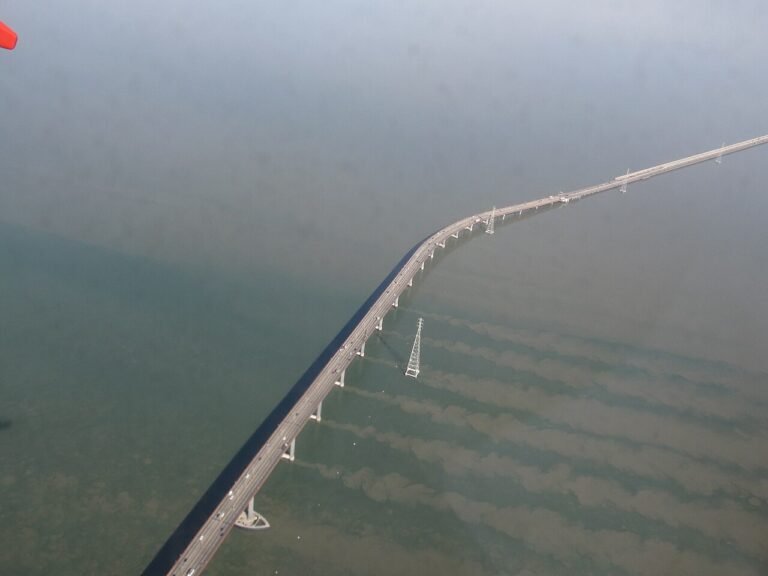
Photo: Ken Lund, CC BY-SA 2.0, via Wikimedia Commons.

Synergist Law is led by attorney Sami Sedghani, a personal injury lawyer. Our office is in downtown San Rafael on 4th Street. We work with San Mateo clients by phone and video, and in person when a case calls for it, and we currently have cases pending in San Mateo County Superior Court. Whoever you choose as your San Mateo car accident attorney, the work starts with the same local records. For the general California rules, see our pages on car accidents, truck accidents, and commercial vehicle accidents.
What San Mateo’s own crash data shows
The San Mateo City Council adopted a Local Roadway Safety Plan on May 20, 2024. The plan counted 2,599 reported collisions on city roads from 2017 through 2021, an average of about 520 a year. Eighty-nine of them killed or severely injured someone. The count left out the US-101 and State Route 92 freeways but included El Camino Real and freeway ramp intersections. Ninety-two percent of the fatal and severe crashes happened at intersections.
The plan scored every intersection by the number and severity of its crashes. Ten made its highest tier, including three on Humboldt Street and two on El Camino Real.
| Tier 1 priority intersection (highest tier) | Fatal and severe injury collisions, 2017 to 2021 | Other injury and property-damage collisions |
|---|---|---|
| El Camino Real and 22nd Avenue | 3 | 10 |
| Humboldt Street and Poplar Avenue | 4 | 16 |
| Humboldt Street and Indian Avenue | 2 | 12 |
| Humboldt Street and Tilton Avenue | 2 | 3 |
| Norfolk Street and Fashion Island Boulevard | 2 | 22 |
| Hillsdale Boulevard and Franklin Parkway | 2 | 6 |
| Dwight Road/Delaware Street and Peninsula Avenue | 2 | 5 |
| Norfolk Street and Hillsdale Boulevard | 1 | 20 |
| El Camino Real and 27th Avenue | 2 | 2 |
| Eldorado Street and 3rd Avenue | 1 | 5 |
Between intersections, the highest-scoring segments were Hillsdale Boulevard from Curtis Street to Norfolk Street and El Camino Real from 28th to 36th Avenue. Citywide, the most frequently cited causes were improper turning (26 percent), unsafe speed (15 percent), and driving or bicycling under the influence (14 percent).
People walking and biking
Pedestrians were involved in 9 percent of San Mateo’s reported collisions but about a third of the fatal and severe ones. From 2017 through 2021, the plan counted 230 pedestrian collisions, including 4 fatal and 27 severe-injury collisions. Half of the eight fatal collisions on city roads in those years involved a pedestrian. Bicyclists were involved in 144 collisions, including 2 fatal and 13 severe-injury collisions. In the plan’s comparison with California’s Strategic Highway Safety Plan categories, pedestrians accounted for 36 percent of the city’s fatal and severe crashes, against 17 percent statewide in 2008 through 2017.
What the data can and cannot do in a claim
Most crashes trace back to a driver and that driver’s insurance. When the road itself contributed, Government Code § 835 allows a claim against the public entity for a dangerous condition of its property. The injured person generally has to show that the entity created the condition, or had actual or constructive notice of it in time to protect against it. A plan that ranks an intersection may point to where to look, but it does not prove a dangerous condition. Public entities have defenses, including design immunity under Government Code § 830.6.
There is a second limit. San Mateo’s plan was partly funded by a Caltrans grant and prepared to meet federal safety grant guidelines. Under 23 U.S.C. § 407, safety data compiled for certain federal highway safety programs may not be subject to discovery or admitted into evidence in a damages case about a location it addresses. Whether that rule reaches a given document is a legal question in each case; police reports and scene evidence are separate sources.
The first two weeks: what a San Mateo car accident lawyer looks at
Sideswipes, rear-end crashes, and broadside crashes are the most common crash types in San Mateo. The first two weeks shape those claims more than people expect:
- The first medical record. Early care, and a first note that describes exactly how the crash happened, carry weight. Insurers point to gaps between the crash and the first visit to argue that the injury came from something else.
- If anyone was injured, or damage exceeded $1,000, each driver must file an SR-1 report with the DMV within 10 days (Vehicle Code § 16000).
- Recorded statements. The other driver’s insurer may call quickly and ask for a recorded statement. Hold off on recorded statements until you consult with a licensed attorney.
- California uses comparative fault, so a share of fault generally reduces a recovery rather than barring it, although California generally bars pain-and-suffering damages for uninsured drivers and vehicle owners and for drivers convicted of DUI, with limited exceptions (Civil Code § 3333.4).
- Vehicles and video. Photographs of the vehicles before repair and any business cameras facing the intersection can become evidence. Video is often overwritten within days.
Who takes the report after a San Mateo crash?
In San Mateo, the San Mateo Police Department takes collision reports on city streets, and the California Highway Patrol usually takes them on US-101, State Route 92, I-280, and unincorporated roads. Police report copies come from the department’s Records Division at 200 Franklin Parkway, with a signed request and photo identification.
The CHP Redwood City Area office, at 355 Convention Way in Redwood City, lists US-101, I-280, SR-92, and SR-82 among the routes it covers. CHP reports are requested through the CHP crash report process.
El Camino Real is State Route 82, a state highway, but it runs at street level through San Mateo with signals and cross streets, and San Mateo police generally take the report there. At freeway ramps, such as US-101 at Third Avenue, either agency may respond, so the agency name and report number from the scene identify the report later. Under Vehicle Code § 20012, reports are released only to people with a proper interest, such as the drivers and injured people involved, owners of damaged vehicles or property, and their attorneys. CHP also releases its reports to insurers with a valid claim or policy number.
Highway 101, Highway 92, and the San Mateo Bridge
In Caltrans’ 2024 truck count data, US-101 at Third Avenue in San Mateo had the highest total traffic of any San Mateo County location, 250,000 to 251,000 vehicles a day. From I-280, Highway 92 runs east across San Mateo, through its interchanges with El Camino Real and US-101, and continues past Foster City onto the San Mateo-Hayward Bridge. According to the Metropolitan Transportation Commission’s bridge facts, the bridge is about seven miles long, with three lanes in each direction and full shoulders along both low-rise trestles.
A Highway 92 accident on the bridge is a freeway crash far from the nearest exit. Tolls are collected westbound on the Hayward side, and the low-rise trestles have full shoulders where disabled vehicles can stop. On the San Mateo County side, the CHP Redwood City Area covers SR-92. The CHP Hayward Area also lists SR-92 on the Alameda County side, so the report number shows which office took a bridge crash.
San Mateo truck accident lawyer: big rigs on 101, Highway 92, and 280
A truck is usually run by a business that has to follow federal and California safety rules, and it usually carries more insurance than a passenger car. This section covers the local questions a San Mateo truck accident lawyer looks at first.
How much truck traffic runs through San Mateo?
US-101 at Third Avenue in San Mateo had the most five-axle trucks of any San Mateo County location in Caltrans’ 2024 truck data, up to 2,886 a day. The San Mateo-Hayward Bridge was second, at 2,651. On the bridge, trucks were about 6.5 percent of all traffic. The last column below, five or more axles, is the category that includes the typical big rig.
| Location | All vehicles per day | Trucks per day | Trucks with 5 or more axles |
|---|---|---|---|
| US-101 at Third Avenue, San Mateo | 250,000 to 251,000 | 9,563 to 11,050 | 2,370 to 2,886 |
| US-101 at the SR-92 junction, San Mateo | 194,000 to 238,000 | 6,266 to 8,306 | 1,731 to 2,455 |
| SR-92 at the US-101 junction, San Mateo | 99,000 to 136,000 | 2,633 to 6,120 | 430 to 2,197 |
| SR-92 at Foster City Boulevard | 99,000 | 6,207 | 1,621 |
| SR-92 at the San Mateo-Hayward Bridge | 99,000 | 6,435 | 2,651 |
| I-280 at the SR-92 junction | 92,000 to 99,000 | 1,573 to 1,663 | 393 to 464 |
Who investigates a truck crash in San Mateo?
The same agencies that handle car crashes: San Mateo police on city streets, and usually the CHP’s Redwood City Area office on the freeways. The CHP’s Commercial Vehicle Section also inspects motor carriers and their terminals.
Markings on the truck. The cab door usually shows the company name and USDOT number, and the trailer may belong to a different company. The Federal Motor Carrier Safety Administration’s Company Snapshot shows a carrier’s registration, insurance on file, and crash history by USDOT number.
The carrier moves first. A motor carrier’s insurer often sends an adjuster or investigator soon after a serious crash. Hold off on recorded statements until you consult with a licensed attorney.
Safety rules that come up in San Mateo truck cases
A violation of a safety rule can be evidence of negligence. Our truck accident page explains these rules in detail.
- Hours of service: 11 hours of driving and no driving after the 14th hour on duty for interstate property carriers (49 CFR § 395.3); 12 hours for California intrastate drivers (Cal. Code Regs., tit. 13, § 1212.5).
- Driver qualification: at least 21 with a valid commercial license (49 CFR § 391.11), with a qualification file the carrier keeps (49 CFR § 391.51).
- Insurance minimums: generally $750,000 for interstate for-hire carriers of nonhazardous freight (49 CFR § 387.9) and for California motor carriers of property (Veh. Code § 34631.5).
- Terminal inspections: carriers must make vehicles and records available to the CHP (Veh. Code § 34501.12), with inspections at least every 90 days (Veh. Code § 34505.5).
- Truck speed limit: 55 mph on US-101, SR-92, and other highways for trucks with three or more axles or a trailer (Veh. Code § 22406).
Evidence in a San Mateo truck case, and how long it lasts
Much of the evidence belongs to the carrier, and some of it is kept only for a limited time. A written preservation letter sent early identifies what has to be kept:
- Engine control module (ECM) data: speed and braking before impact.
- Electronic logging device and hours-of-service records: at least six months (49 CFR § 395.8(k)).
- The driver qualification file: while the driver is employed, plus three years.
- The 90-day inspection records: two years.
- The accident register: three years after each accident (49 CFR § 390.15).
- Dispatch and load records, which show who controlled the trip.
- Dashcam and telematics video: often overwritten on a routine cycle, and business video along the route is often gone within days.
Who may be responsible, and what insurance applies
A truck crash often involves more than one company, and the coverage behind each one differs:
- The driver, for unsafe, fatigued, or distracted driving.
- The motor carrier, for an employee driver and directly for negligent hiring or maintenance. A carrier that leases an owner-operator’s truck must take “exclusive possession, control, and use” of it under federal leasing rules (49 CFR § 376.12(c)(1)).
- The shipper, loader, or broker, in some cases.
- A maintenance shop or manufacturer, for defective brakes, tires, or other parts; see product liability.
- A public entity, subject to the six-month government claim described below.
The name on the trailer does not settle who employed the driver. Whether the driver was an employee, a leased owner-operator, or an independent contractor is a fact question usually developed in discovery. California’s terminal-inspection statute itself says that complying with its leasing provisions does not imply an employee-employer relationship (Veh. Code § 34501.12(b)(2)).
An individual driver may carry only California’s minimum limits: $30,000 per person and $60,000 per accident for bodily injury, for policies issued or renewed since January 1, 2025 (Veh. Code § 16056). A business usually has a commercial policy, sometimes with excess layers that surface only in discovery. Your own uninsured and underinsured motorist coverage can matter either way.
Delivery vans raise their own questions about who controlled the driver. See our pages on delivery driver accidents, UPS truck accidents, FedEx truck accidents, and Amazon delivery accidents.
Caltrain crossings and a Caltrain accident in San Mateo
Caltrain stops at three stations in San Mateo: San Mateo (385 First Avenue), Hayward Park (401 Concar Drive), and Hillsdale (50 E. 28th Avenue). According to the City’s Train Quiet Zone page, the tracks and every safety warning device at the crossings belong to the Peninsula Corridor Joint Powers Board. Caltrain runs the passenger service, and Union Pacific runs freight on the same line. The City lists at-grade crossings at Villa Terrace, E. Bellevue Avenue, 1st, 2nd, 3rd, 4th, 5th, and 9th Avenues, and Hayward Park Station.
The 25th Avenue Grade Separation Project, completed in September 2021, raised the tracks at 25th Avenue. The City also plans to close Villa Terrace and E. Bellevue Avenue at the tracks, with construction now expected in spring 2027.
If a Caltrain accident involves the train, the gates, a platform, or rail property, the Peninsula Corridor Joint Powers Board is a public entity, and a government claim to it is generally due within six months. That claim is in addition to any claim against a driver. Photographs of the gates and signals, the train number, and an early request for the train’s video and event-recorder data help establish what happened.
Robotaxis on the Peninsula: Waymo and Zoox
On November 12, 2025, Waymo announced it was opening rider access across the entire Peninsula, from San Francisco to San Jose, and beginning freeway trips in the Bay Area. The CPUC’s advice letter status page shows an August 14, 2026 disposition letter on Waymo’s updated passenger safety plan for its expanded deployment territory.
Zoox, the robotaxi company owned by Amazon, lists its headquarters at 1149 Chess Drive in Foster City on its own site. The DMV’s permit list, updated October 22, 2026, shows Zoox authorized to test without a safety driver in Foster City and San Francisco, at speeds up to 45 mph. A Zoox Foster City test vehicle or a Waymo may be the other car in a Peninsula crash.
These cases have their own evidence. Under Vehicle Code § 38750, an autonomous vehicle must capture sensor data from at least 30 seconds before a collision. Waymo’s rider terms include JAMS arbitration, a 45-day informal resolution period, a two-year claim notice, and a 30-day email opt-out. A pedestrian, cyclist, or other driver did not agree to those terms. Vehicle Code § 38752 (AB 1777), which took effect July 1, 2026 under DMV regulations, adds a process for notices of autonomous vehicle noncompliance. See our self-driving car accident and Waymo accident pages.
SamTrans, the County, and other public agencies
Each public agency in San Mateo receives its own claims, with a six-month deadline for personal injury under Government Code § 911.2. A lawsuit can follow only after the agency acts on the claim or the time for it to act runs out. Because the deadline depends on the facts, it is better to have a licensed California attorney determine the deadline that applies than to calculate it yourself.
- City streets and City property: the City of San Mateo. According to the City’s claim form, claims go to the City Clerk at 330 West 20th Avenue, by mail, hand delivery, or email to claims@cityofsanmateo.org.
- County roads and County property: the County of San Mateo, through the Clerk of the Board of Supervisors in Redwood City.
- SamTrans buses: the San Mateo County Transit District, a separate public entity with its own claim process.
- Caltrain: the Peninsula Corridor Joint Powers Board, as described above.
- State highways, including the San Mateo Bridge and El Camino Real (State Route 82): the State. Under Caltrans’ claim instructions, claims of $12,500 or less can go to Caltrans directly, and larger claims go to the Department of General Services Government Claims Program.
- Schools and colleges: College of San Mateo and the local school districts are separate public entities with their own claim processes.
Where a San Mateo case is filed
Injury lawsuits arising in San Mateo are generally filed in the San Mateo County Superior Court. According to the court’s locations page, the civil clerk’s office is at the Southern Branch, the Hall of Justice and Records, 400 County Center in Redwood City. The civil division assigns each case to one judge, who may sit at the Hall of Justice, the Central Branch at 800 North Humboldt Street in San Mateo, or the Northern Branch in South San Francisco.
The deadlines are the same as anywhere in California. An injury lawsuit against a private person or company generally must be filed within two years of the injury (Code of Civil Procedure § 335.1). A claim for damage to a vehicle or other property generally must be filed within three years (§ 338). When a public entity is involved, the six-month government claim comes first, and missing it can end the claim against that entity. A child’s injury claim usually has more time, but the six-month government claim deadline is not paused the same way. Because the deadline depends on the facts, it is better to have a licensed California attorney determine the deadline that applies than to calculate it yourself.
San Mateo County: Redwood City, Menlo Park, Burlingame, Foster City, and nearby cities
The same rules apply across San Mateo County, but each city is a separate public entity with its own claim process. On the freeways and unincorporated roads, the CHP Redwood City Area, whose territory includes about 650 miles of unincorporated roadways across parts of San Mateo, Santa Clara, and Alameda counties, is usually the responding agency.
- Redwood City. The Hall of Justice and the CHP Redwood City Area office are here. US-101 at Whipple Avenue had the most total trucks of any San Mateo County location in Caltrans’ 2024 truck data, about 11,394 a day out of 233,000 vehicles.
- Menlo Park. State Route 84 crosses Menlo Park to the Dumbarton Bridge, and the CHP Hayward Area says its territory includes a small portion of San Mateo County near that bridge.
- Burlingame. Burlingame borders San Mateo to the north, and crashes there follow the same split between city streets and the freeway.
- Foster City. Zoox’s headquarters and its driverless test area are here, and SR-92 at Foster City Boulevard carried about 6,207 trucks a day in 2024.
- Belmont, San Carlos, Hillsborough, Millbrae, San Bruno, South San Francisco, and Daly City. Cases from all of them are generally filed in the same San Mateo County Superior Court.
Atención en español
Alrededor del 28 por ciento de los residentes de San Mateo son hispanos o latinos, según la Oficina del Censo de EE. UU. Sami Sedghani habla español con fluidez. Si usted resultó lesionado en un accidente en San Mateo, puede llamar al (415) 835-4448 para una consulta gratuita. En las calles de la ciudad y en El Camino Real, el informe generalmente lo hace la Policía de San Mateo; en la 101, la 92, la 280 o el puente de San Mateo, generalmente lo hace la CHP. El plazo para presentar un reclamo contra la Ciudad, el Condado, SamTrans, Caltrain o el Estado generalmente es de seis meses. Como el plazo depende de los hechos, es mejor que un abogado con licencia en California determine el plazo que aplica en su caso, en lugar de calcularlo por su cuenta. Esta información es general y no constituye asesoría legal.
How we approach a San Mateo injury case
Our first step is to pin down the facts that are hardest to rebuild later. Those include the agency report, the intersection’s signal timing, nearby business or traffic video before it is overwritten, and whether the location appears in the City’s Local Roadway Safety Plan. Sami spent nine years at large law firms handling complex and product liability litigation for companies, and that is where he learned which gaps a defense team tends to look for first. Sami lived in Menlo Park for three years while working as a litigation associate at a large law firm on the Peninsula.
Sami is also a former clinical pharmacist, and we read the medical records closely: the imaging, the medication history, and whether the treating notes connect the crash to the diagnosis. None of that predicts the result in any case. It is how we prepare one.
Choosing a San Mateo personal injury lawyer
When you choose a San Mateo personal injury lawyer, or any lawyer for an injury outside Marin, a local office is a convenience, not a qualification. Every California-licensed lawyer is licensed to practice in every county in the state. The questions worth asking any lawyer you interview, including us, are about the advocacy itself. Does the lawyer have experience with the kind of case you have, and a clear strategy for proving it? Do you trust that lawyer to tell you the truth about it?
Other Bay Area cities: San Francisco injury claims, Oakland injury claims, San Jose injury claims, Fremont injury claims, all areas we serve, and Marin County injury claims, where our office is.
Other cases we handle in San Mateo
Crashes get the most space on this page, but we handle other injury cases for people hurt in San Mateo too. If you are looking for a San Mateo personal injury attorney for one of these, the page for each case type is below:
- Motorcycle accidents
- Truck accidents, including big rigs and other heavy trucks
- Delivery van and commercial vehicle accidents, including Amazon, FedEx, and UPS vehicles
- Lyft and rideshare accidents
- Bicycle and e-bike accidents
- Self-driving car and Waymo accidents
- Slip and fall injuries and other premises liability cases
- Brain, spinal cord, and other catastrophic injuries
- Wrongful death claims
- Nursing home abuse and elder neglect
- Medication and pharmacy errors
- Defective products
Each of those pages explains the California law for that kind of case. The local details on this page, such as which agency takes the report and where a claim or lawsuit is filed, apply to all of them.
Frequently asked questions about San Mateo injury claims
Who takes the report for a crash on Highway 101 or Highway 92 in San Mateo?
The California Highway Patrol’s Redwood City Area office, at 355 Convention Way in Redwood City, covers US-101, SR-92, and I-280 on the San Mateo County side. Crashes on city streets and on El Camino Real are generally handled by the San Mateo Police Department, whose Records Division is at 200 Franklin Parkway.
Which San Mateo intersections have the most serious crashes?
The City’s 2024 Local Roadway Safety Plan ranked El Camino Real at 22nd Avenue first and Humboldt Street at Poplar Avenue second. Humboldt Street at Poplar Avenue had 4 fatal or severe injury collisions from 2017 through 2021. Three of the ten highest-ranked intersections are on Humboldt Street.
Where is a San Mateo injury lawsuit filed?
Generally in the San Mateo County Superior Court. The civil clerk’s office is at the Hall of Justice, 400 County Center in Redwood City. Each civil case is assigned to one judge, who may sit in Redwood City, at the Central Branch on North Humboldt Street in San Mateo, or in South San Francisco.
How do I file a claim against the City of San Mateo?
The City’s claim form goes to the City Clerk at 330 West 20th Avenue, by mail, hand delivery, or email to claims@cityofsanmateo.org. For personal injury, a claim against a California public entity generally must be filed within six months of the incident. Because the deadline depends on the facts, it is better to have a licensed California attorney determine the deadline that applies than to calculate it yourself.
Who handles a San Mateo Bridge accident?
The CHP. Its Redwood City Area covers SR-92 on the San Mateo County side, and its Hayward Area lists SR-92 on the Alameda County side, so the report number shows which office took the crash. If the bridge or highway condition contributed, a claim to the State is generally due within six months. Because the deadline depends on the facts, it is better to have a licensed California attorney determine the deadline that applies than to calculate it yourself.
Who is responsible for a Caltrain accident in San Mateo?
The tracks and crossing warning devices in San Mateo belong to the Peninsula Corridor Joint Powers Board, a public agency. If the train, the gates, or rail property played a role, a government claim to the board is generally due within six months, in addition to any claim against a driver. Because the deadline depends on the facts, it is better to have a licensed California attorney determine the deadline that applies than to calculate it yourself.
How many trucks use Highway 101 through San Mateo?
Caltrans’ 2024 data estimates 9,563 to 11,050 trucks a day on US-101 at Third Avenue, out of about 250,000 vehicles. That location had the most five-axle trucks of any San Mateo County count location, up to 2,886 a day.
Talk to a San Mateo car accident lawyer
If you were seriously injured in a car or truck crash in San Mateo, we can review the report, the insurance, and your medical records with you. We can also identify the deadlines that apply. Call (415) 835-4448 or request a free consultation. Se habla español. Office: 1299 4th Street, Suite 301, San Rafael, CA 94901.
Contingency fee: no attorney’s fee unless we obtain a recovery for you. Depending on the terms of your written fee agreement, you may be responsible for case costs we advance even if there is no recovery. Your fee agreement explains this before representation begins.
Local procedures, projects, and data described here may change after the date shown above. Every case turns on its own facts, and nothing on this page predicts any outcome, timeline, or value in your matter.