
By Sami Sedghani, Pharm.D., J.D. · Synergist Law, P.C. · San Rafael, California · Updated October 25, 2026
This page provides general information about California law and local procedures as they apply to injuries in San Francisco. It is not legal advice, and reading it does not create an attorney-client relationship. Every case depends on its own facts. For advice about your specific situation, consult a licensed California attorney.
San Francisco packs about 826,000 people into roughly 47 square miles (U.S. Census Bureau), and people walking make up a large share of those hurt and killed in its crashes. Who writes the crash report, which office receives a claim, and what evidence matters first all depend on where in the city the crash happened.
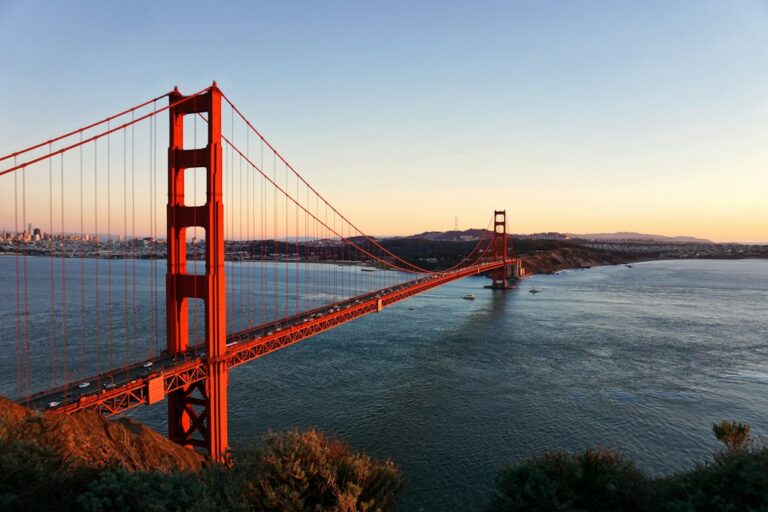
I’m Sami Sedghani, a personal injury lawyer. My office is in downtown San Rafael, across the Golden Gate Bridge, and I handle injury cases in San Francisco, a city where I lived for more than 15 years. This page covers what is specific to San Francisco. Our pages on car accidents, truck accidents, and self-driving car accidents cover the statewide rules.
What San Francisco’s own crash data shows
The City counted 26 traffic deaths in 2023 (Vision Zero SF 2023 report), 43 in 2024 (2024 report), and 25 in 2025 (SFMTA, January 2026). People walking made up 69 percent of the deaths in 2023 and 56 percent in 2024. Year to year, the numbers swing, but the pattern does not: in San Francisco, the person most likely to be killed in a crash is a pedestrian.
| Measure | San Francisco |
|---|---|
| Traffic deaths, 2023 / 2024 / 2025 | 26 / 43 / 25 |
| Pedestrians among those killed | 69 percent (2023); 56 percent (2024) |
| High Injury Network | 13 percent of city streets, where 74 percent of serious and fatal injuries occur |
| Hit-and-run share of deaths | 27 percent (2023); 12 percent (2024) |
| State ranking among 15 large California cities (2023), adjusted for population and miles driven | Worst for pedestrian, bicyclist, motorcyclist, and older-pedestrian victims |
The City’s 2024 High Injury Network map, published in March 2026, identifies the 13 percent of streets where 74 percent of serious and fatal injuries occur, based on 2020 to 2024 data. When the Tenderloin became the city’s first neighborhood-wide 20 mph zone in 2021, every one of its streets was on the network (SFMTA). A street’s place on the network does not prove the City is responsible for a crash, but it can be a reason to look at the design and the history of a location.
The California Office of Traffic Safety ranks cities within size groups, adjusting for population and vehicle miles traveled, where 1 is the worst (OTS ranking method). In 2023, San Francisco ranked worst among the 15 largest California cities for pedestrian, bicyclist, motorcyclist, and older-pedestrian victims. In raw numbers, 648 pedestrians, 397 bicyclists, 406 motorcyclists, and 124 pedestrians 65 and older were killed or injured in the city that year.
Pedestrian and bicycle crashes
Most San Francisco pedestrian cases turn on the right-of-way. California requires drivers to yield to people in a marked crosswalk or an unmarked crosswalk at an intersection (Vehicle Code § 21950), and that duty continues toward people lawfully in the crosswalk when the driver has a green light and is turning across it (Vehicle Code § 21451). In San Francisco, the evidence that settles those disputes is often close at hand: many storefronts and residential buildings have doorbell or security cameras, and the City now runs a 33-camera speed camera pilot, the first in California. Many camera systems record over footage quickly, so preservation letters should go out early.
Speed matters most when the person hit is on foot. The SFMTA notes that a pedestrian struck at 20 mph has about a 90 percent chance of surviving, compared with about 20 percent at 40 mph (SFMTA speed management). On a crowded San Francisco street, a speed under the posted limit can still be unlawful if it is unsafe for the conditions (Vehicle Code § 22350).
Older pedestrians
Seniors face particular risk. Twelve of the 43 people killed in 2024, or 28 percent, were 65 or older (Vision Zero SF 2024 report), and in 2023 San Francisco ranked worst among large California cities for older pedestrians killed or injured, after adjusting for population and miles driven (OTS). For an older person, the same impact often means a longer recovery and medical needs that continue for years, so the medical records and a treating doctor’s explanation carry particular weight.
Hit-and-run crashes
Seven of the 26 traffic deaths in 2023 (27 percent) and five of the 43 in 2024 involved a driver who left the scene (2023 and 2024 reports). When the driver is never identified, the claim usually turns to the injured person’s own uninsured motorist coverage, which can apply even to someone who was walking or riding a bike when hit.
First steps after a San Francisco crash
- Call 911 if anyone is hurt. Note whether San Francisco Police or the California Highway Patrol responded, and get the report number.
- Photograph the scene, the signal, and every camera that faces it: storefronts, apartment entries, and the bus if Muni was nearby.
- If the driver left, report it to police within 24 hours. For an uninsured motorist claim after a hit-and-run, California law generally requires physical contact, that police report, and a sworn statement to your insurer within 30 days (Insurance Code § 11580.2). See our guide to uninsured and underinsured motorist claims.
- Each driver in a crash with any injury, or with more than $1,000 in damage to anyone’s property, owes the DMV an SR-1 form within 10 days (Vehicle Code § 16000).
- If a Muni vehicle, a City street, or another public agency may be involved, mark six months from the crash date. That claim deadline comes long before the two-year deadline for most lawsuits.
Who takes the report after a San Francisco crash
- City streets: San Francisco Police Department. According to SFPD, traffic collision reports are free. They can be requested online through the department’s records portal or in person at SFPD Headquarters, 1245 Third Street, but not at district stations. SFPD asks people to wait at least five business days after the collision before requesting a report, and attorneys must show proof of representation.
- Freeways and the Bay Bridge: CHP San Francisco Area office. The office at 455 Eighth Street covers the Bay Bridge from the toll plaza at its east end, plus Interstate 80, US-101, Interstate 280, Interstate 380, and Highway 1 through the city. CHP reports are requested through the CHP’s own process.
- The Golden Gate Bridge. The Golden Gate Bridge, Highway and Transportation District employs its own bridge patrol officers, who conduct preliminary investigations of crashes on the bridge and coordinate with the CHP (District job description). Ask which agency is writing the report before you leave the scene.
Collision reports are not public records in the usual sense. Vehicle Code § 20012 limits them to people with a proper interest in the crash, such as the drivers, the people injured, and their lawyers.
Claims against the City, Muni, and schools
Before anyone can sue a California public agency for an injury, a written claim generally has to be presented to that agency, by mail or delivery, within six months (Government Code § 911.2). San Francisco is both a city and a county, and one office receives claims for both, including claims involving Muni buses, light rail, and cable cars:
- City and County of San Francisco, including Muni: the Controller’s Office Claims Division, 1390 Market Street, 7th Floor. The City does not accept claims online, by email, or by fax; they must be mailed or hand-delivered. The City Attorney’s Office then investigates. For a bus or light rail crash, the City’s claim form asks for the line and vehicle number.
- San Francisco Unified School District: the City does not accept these claims. Its form directs them to the school district at 555 Franklin Street, 2nd Floor. The community college district and the Housing Authority are also separate.
- BART, Caltrain, and the Golden Gate Bridge District (bridge, Golden Gate Transit buses, and Golden Gate Ferry) are separate public agencies, each with its own claim process. A claim filed with the City does not reach them.
When the problem is the street itself, such as a broken signal, a missing crosswalk, or a pothole, the City is responsible only if the condition was dangerous, caused the injury, and created a foreseeable risk of that kind of injury, and either a City employee’s negligent act created it or the City had notice and time to correct it (Government Code § 835). In some cases the City can also raise design immunity for features built to an approved, reasonable plan (Government Code § 830.6).
Muni, cable cars, and Market Street
Since January 29, 2020, Market Street has been closed to private cars between 10th Street and Main Street eastbound and between Steuart Street and Van Ness Avenue westbound. Taxis, commercial vehicles, emergency vehicles, and paratransit can still use it, and since August 2025 the SFMTA has allowed Waymo and a limited number of commercially plated ride-hail vehicles to provide limited passenger service there (SFMTA, December 2025). When it made the 2020 change, the SFMTA said Market Street was home to half of the city’s top 10 intersections for pedestrian and bicycle collisions and carried upwards of 200 buses an hour at peak times (SFMTA).
The city’s three cable car lines, California, Powell-Hyde, and Powell-Mason, run on steep grades with riders standing on the outside steps. A fall while boarding, a sudden stop, or a collision with a car can cause serious injuries, and because Muni is part of the City, those claims go to the Controller’s Office within six months.
Robotaxis in San Francisco
Driverless rides are now part of everyday traffic in San Francisco. State regulators authorize Waymo to charge fares for driverless rides in San Francisco and on the Peninsula, including San José (CPUC, May 2025), and in January 2026 Waymo began rides to and from SFO for select riders, with pickup and drop-off at the Rental Car Center (Waymo). Zoox holds a driverless testing permit for San Francisco but is not on the DMV’s deployment list (DMV permit holders), and its state pilot permit does not allow it to charge fares (CPUC permit).
A crash with a driverless vehicle raises its own questions: who receives the claim, what the vehicle recorded, and whether a rider’s terms of service require arbitration. Riders and people outside the vehicle, such as pedestrians and other drivers, are in different positions. See our page on self-driving car and robotaxi accidents.
Shared scooters
The SFMTA permits shared e-scooters. According to its scooter safety rules, riding on the sidewalk is illegal, the speed limit is 15 mph, only one person may ride at a time, riders need a driver’s license or instruction permit, and riders under 18 must wear a helmet. When a scooter is involved, responsibility can fall on a car driver, the rider, the operator that maintains the scooter, or a street defect, and more than one can share it.
Where a San Francisco case is filed
Injury lawsuits arising in San Francisco are usually filed in the San Francisco Superior Court. Civil cases are handled at the Civic Center Courthouse, 400 McAllister Street, and attorneys must file personal injury cases electronically under Local Rule 2.11 (court notice). A case usually belongs in the county where the crash happened or where a defendant lives (Code of Civil Procedure § 395).
San Francisco follows the statewide clock. A lawsuit against a driver or a company generally must be filed within two years (Code of Civil Procedure § 335.1), while a claim against the City, Muni, or another public agency is due in six months. For an injured child, the two-year period usually does not start until the child turns 18, but that pause does not apply to claims against public agencies. If a child’s six-month claim deadline is missed, a late-claim application within one year is generally available and must be granted in that situation (Government Code §§ 911.4 and 911.6).
Atención en español
Más de 4 de cada 10 residentes de San Francisco de 5 años o más hablan en casa un idioma distinto del inglés, según la Oficina del Censo de EE. UU. Sami Sedghani habla español con fluidez y vivió en San Francisco por más de 15 años. Para una consulta gratuita sobre un accidente en la ciudad, llame al (415) 835-4448. En las calles, el informe lo hace la Policía de San Francisco y es gratuito; en las autopistas y el Bay Bridge, la CHP. El reclamo contra la Ciudad o Muni se presenta por correo o en persona en la Oficina del Contralor, generalmente dentro de seis meses. Esta es información general, no asesoría legal.
How we handle a San Francisco case
San Francisco is where I trained and built my career. I earned my Doctor of Pharmacy at UCSF and worked as an inpatient pharmacist at UCSF Medical Center, then graduated from UC Hastings (now UC Law SF). I spent nine years at large law firms with offices in San Francisco, handling complex and product liability litigation for companies. I was married at the Bentley Reserve, our children were born in San Francisco, and I lived in the city for more than 15 years.
When you choose a lawyer for an injury outside Marin, a local office is a convenience, not a qualification. Every California-licensed lawyer is licensed to practice in every county in the state. The questions worth asking any lawyer you interview, including me, are about the advocacy itself: experience with the kind of case you have, a clear strategy for proving it, and whether you trust that lawyer to tell you the truth about it.
The first weeks of a San Francisco case are about local details: getting the SFPD or CHP report, sending preservation letters for storefront and Muni video, finding every policy that may apply, and getting a claim to the Controller or the right transit agency on time. My office is a short drive across the bridge, and I meet clients in San Francisco and appear in court there when a case calls for it. My pharmacy training still shapes how I read a medical chart, though no background predicts how a case will turn out.
Nearby and related: our Marin County page covers the county just across the bridge, and the Areas We Serve page lists every county we handle, including Los Angeles County.
Frequently asked questions about San Francisco injury claims
Who takes the report for a crash in San Francisco?
On city streets, the San Francisco Police Department. On freeways and the Bay Bridge, the California Highway Patrol’s San Francisco Area office. On the Golden Gate Bridge, the bridge district’s patrol officers conduct preliminary investigations and work with the CHP, so ask at the scene which agency is writing the report.
How do I get a San Francisco police collision report?
According to SFPD, traffic collision reports are free and can be requested through the department’s online records portal or in person at SFPD Headquarters, 1245 Third Street, but not at district stations. SFPD asks requesters to wait at least five business days after the collision.
How do I file a claim against the City of San Francisco or Muni?
Claims against the City and County, including Muni buses, light rail, and cable cars, are filed with the Controller’s Office Claims Division, 1390 Market Street, 7th Floor. They must be mailed or hand-delivered; the City does not accept them online, by email, or by fax. The claim generally must be filed within six months. Because the deadline depends on the facts, it is better to have a licensed California attorney determine the deadline that applies than to calculate it yourself.
What if I was hit by a Waymo or another driverless car in San Francisco?
Get the report number, photograph the vehicle and its identifying markings, and note the time. Whether you were a rider or outside the vehicle affects the process, including whether a rider agreement requires arbitration. The operator’s vehicle data is often central, so it should be preserved early.
Can a San Rafael lawyer handle my San Francisco injury case?
Yes. California lawyers can practice anywhere in the state. Sami lived in San Francisco for more than 15 years, and his San Rafael office is a short drive across the Golden Gate Bridge. He meets clients and appears in court in San Francisco when a case calls for it.
Talk to a lawyer about a San Francisco injury
If you were seriously injured in San Francisco, I can review the report, the insurance, and your medical records with you and identify the deadlines that apply. Call (415) 835-4448 or request a free consultation. Se habla español. Office: 1299 4th Street, Suite 301, San Rafael, CA 94901.
Contingency fee: no attorney’s fee unless we obtain a recovery for you. Depending on the terms of your written fee agreement, you may be responsible for case costs we advance even if there is no recovery. Your fee agreement explains this before representation begins.
Local procedures, projects, and data described here may change after the date shown above. Every case turns on its own facts, and nothing on this page predicts any outcome, timeline, or value in your matter.