A unanimous First District panel reverses summary judgment, holds the trial court was “wrong as a matter of law,” and sends the case back with instructions to deny the defense motion outright.
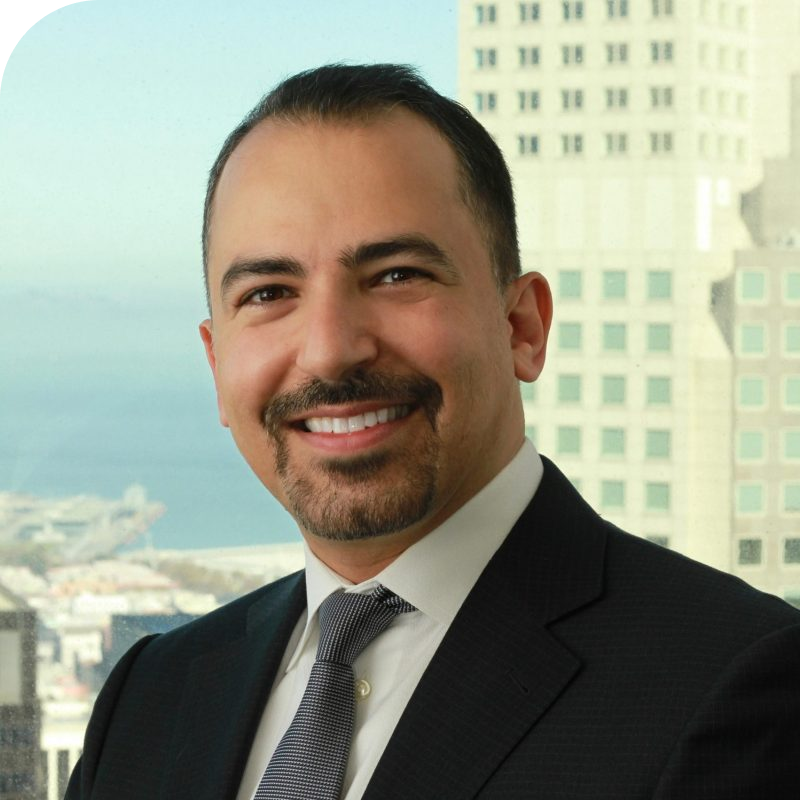
On September 29, 2026, the California Court of Appeal, First Appellate District, Division Two, handed the family of Anya Valencia — and their attorney, Sami Sedghani of Synergist Law, P.C. — a resounding appellate victory in Osaze v. Aparicio-Gee (Sept. 29, 2026, A173403), a wrongful death case arising from a fatal, unwitnessed fall at a Daly City veterinary hospital. The unanimous opinion, authored by Presiding Justice Therese M. Stewart and joined by Justices James A. Richman and Marla J. Miller, was certified for publication — meaning the court considered the decision important enough to serve as binding precedent for trial courts across California.
The Court did not merely reverse. It remanded “with instructions to the trial court to vacate its order granting the motion for summary judgment and to enter a new order denying the motion,” and awarded the family their costs on appeal. The case now returns to the San Mateo County Superior Court for the jury trial the Valencia family has sought from the beginning.
The Challenge: A Wrongful Death Case With No Eyewitnesses
In August 2020, Anya Valencia — a 69-year-old wife, mother, and grandmother — brought her daughter’s dog to Skyline Pet Hospital for a bath. The dog was never secured, the grooming room door had been propped open so it could not close, and when the dog slipped out, Ms. Valencia went after it. Moments later she was found face-down in the hallway with catastrophic head and neck injuries. She died three days later. No one saw her fall.
Defense lawyers built their entire case on that last fact. Because the fall was unwitnessed, they argued, any explanation of what caused it was mere “speculation” — and a family whose loved one cannot testify could never prove causation. The trial court agreed, excluded the key opinions of the family’s three experts, and threw the case out on summary judgment before it could ever reach a jury.
Synergist Law appealed — and the Court of Appeal rejected that argument in the strongest terms available.
What the Court of Appeal Held — In Its Own Words
The published opinion speaks for itself. On the central question — whether a wrongful death case can be dismissed just because no one witnessed the fall — the Court held:
“The trial court’s supposition that expert evidence about the cause of an ‘unwitnessed’ accident is necessarily ‘speculative’ and inadmissible is wrong as a matter of law.”
Osaze v. Aparicio-Gee (Sept. 29, 2026, A173403)
On the trial court’s decision to strike the family’s expert witnesses — a forensic engineer, a biomechanical engineer, and a veterinary hospital safety expert — the Court explained that “simply labelling an opinion as ‘speculation’ does not make it so,” and concluded after its own independent review:
“[O]ur own review of the evidence leads us to conclude that those declarations withstand Sargon analysis and should not have been excluded.”
Osaze v. Aparicio-Gee (Sept. 29, 2026, A173403)
On the role of the trial judge at summary judgment, the Court was equally direct. Summarizing the error at the outset of the opinion, it wrote that the trial court “failed to construe plaintiffs’ evidence liberally and draw reasonable inferences in their favor and instead usurped the function of the jury.” Quoting the rule that a court’s “sole function on a motion for summary judgment is issue-finding, not issue-determination,” the panel concluded: “The trial court engaged in the latter, not the former. There was a triable issue here, and it should have been left for a jury to decide.”
And measuring the family’s evidence against Kaney v. Custance (2022) 74 Cal.App.5th 201 — the leading California case on unwitnessed falls, which the Court called “on point” — the panel found:
“Plaintiffs’ evidence is much stronger and clearer than the evidence held sufficient in Kaney. We conclude the record here is more than sufficient to raise a triable issue of fact.”
Osaze v. Aparicio-Gee (Sept. 29, 2026, A173403)
Why This Published Opinion Matters for Injury Victims Across California
Most Court of Appeal decisions are unpublished and bind no one. This one was certified for publication, which means every trial court in California must now follow it. Three holdings matter for anyone pursuing a wrongful death or serious injury case without eyewitnesses:
- An unwitnessed fall is not an unprovable fall. California law has long permitted juries to find causation from circumstantial evidence. Extending Kaney, the Court held that just as “[a] slip-and-fall plaintiff need not remember her fall to recover damages provided the evidence gives rise to a reasonable and probable inference that the defendant’s negligence was a substantial contributing factor,” the “same is true for a plaintiff whose injuries result in her death, preventing her from testifying.” Families are not shut out of court because the person who could tell the story did not survive.
- Qualified experts cannot be silenced with labels. The opinion is a forceful application of Sargon Enterprises, Inc. v. University of Southern California (2012) 55 Cal.4th 747: a trial judge acts as a gatekeeper of expert methodology, not a rival juror who rejects conclusions the judge finds unpersuasive. Synergist Law’s experts did what rigorous experts should do — a comprehensive site inspection, precise measurements, a 3-D scan, biomechanical analysis of the autopsy findings, and systematic elimination of alternative causes. As the Court observed, quoting fifty years of California law, “expert reconstruction often is more accurate than statements of witnesses.”
- Summary judgment is not a substitute for trial. The decision reinforces that judges may not weigh evidence, resolve conflicts in testimony, or credit a defendant’s account over physical and scientific evidence. Those judgments belong to twelve jurors.
A Precedent That Protects Every California Family — Not Just This One
Because this opinion is published, its reach extends far beyond one courtroom in San Mateo County. Falls are the leading cause of injury-related death among older adults in the United States, and the cruel arithmetic of these cases is that the person best able to describe what happened is often the person who did not survive. For years, defense lawyers have exploited that reality with a simple playbook: no eyewitness means no causation, no causation means no case, and any expert who reconstructs the fall is dismissed as “speculating.” Under that logic, the more catastrophic the fall, the safer the negligent property owner.
Osaze v. Aparicio-Gee dismantles that playbook as binding precedent. Every trial judge in California must now follow its holdings — that an unwitnessed accident is not automatically an unprovable one, that a deceased victim’s silence does not extinguish her family’s rights, and that qualified experts who inspect the scene, measure the hazard, analyze the injuries, and rule out alternative causes are giving evidence, not guesses. The opinion will be cited in nursing home falls, workplace deaths, solo car accidents, stairway and premises cases — any tragedy where the defense’s first move is “no one saw it happen.”
The decision also protects something larger than any single category of case: the constitutional right to a jury trial itself. Summary judgment exists to filter out cases with no evidence, not to let judges decide close cases from the bench. When a trial court “usurp[s] the function of the jury” — the Court of Appeal’s words — every litigant’s right to be heard by a jury of ordinary citizens is diminished. This published opinion redraws that line, clearly and citably, for every civil case in the state. That is why appellate wins like this one matter beyond the clients they immediately serve: the Valencia family’s persistence just made the courthouse door harder to close on the next grieving family.
The Winning Strategy
This victory did not happen by accident. Synergist Law built the record for it from the start: retaining three independent, highly credentialed experts; documenting the hazard with forensic measurements and industry safety standards; preserving the first responders’ contemporaneous reports; and briefing the appeal around the precise legal error — a trial court that decided the case instead of screening it. At oral argument before the panel in August 2026, Sami Sedghani pressed the point that every explanation for Ms. Valencia’s fall supported by the record ran through the defendants’ own conduct, and that choosing among them was the jury’s job. The unanimous published opinion adopted that framework.
What Happens Now
The case returns to San Mateo County Superior Court with summary judgment denied by order of the Court of Appeal — both defendants remain in the case, both of the family’s liability theories remain live, and the family’s expert witnesses stand vindicated by a published appellate decision. The Valencia family will finally have the opportunity to present their case to a jury.
To be clear: the Court of Appeal’s decision restores the family’s right to a trial; the defendants continue to deny liability, and negligence and causation remain to be decided by the jury. That is exactly what the family has asked for all along — their day in court.
Frequently Asked Questions
Can you win a wrongful death case in California if no one witnessed the accident?
Yes. As Osaze v. Aparicio-Gee confirms, California law allows juries to find causation from circumstantial evidence — physical evidence, injury patterns, expert reconstruction, and the elimination of alternative explanations. A family is not barred from recovery because their loved one cannot testify.
What is summary judgment, and why does this reversal matter?
Summary judgment is a procedure that ends a case before trial if the court concludes no reasonable jury could find for the plaintiff. When it is granted wrongly, an injured family loses its constitutional right to a jury trial without any jury ever hearing the evidence. A reversal restores that right.
What is a biomechanical expert?
A biomechanical engineer analyzes how forces act on the human body — here, showing that Ms. Valencia’s specific injuries were consistent with a forward, trip-type fall and inconsistent with a slip, a backward fall, or a collapse from a medical event.
What does “certified for publication” mean?
Only a small fraction of Court of Appeal opinions are published. A published opinion becomes citable, binding precedent throughout California — this decision will now protect other injury victims facing the same “no witnesses” defense.
Does this decision help people outside of trip-and-fall cases?
Yes. Its core holdings — that circumstantial and expert evidence can prove how an unwitnessed accident happened, and that judges may not resolve factual disputes at summary judgment — apply to nursing home falls, workplace fatalities, single-vehicle collisions, and any injury or death case where no witness survives to testify.
Who handled this appeal?
Sami Sedghani of Synergist Law, P.C. briefed and argued the appeal on behalf of the Valencia family, from opposition to the summary judgment motion through oral argument before the First District panel.
Talk to a California Wrongful Death Attorney
If you have lost a loved one in an unwitnessed accident — a fall, a workplace incident, or any death where the defense claims “no one can know what happened” — do not assume the case cannot be proven. Synergist Law, P.C. represents families in wrongful death and premises liability cases throughout the Bay Area and across California, and we build cases the way this one was built: with rigorous experts, forensic evidence, and appellate-grade advocacy at every stage.
Free Consultation — Synergist Law, P.C.
Call: (415) 835-4448
Email: sami@synergistlaw.com
Office: San Rafael, California
Prior results do not guarantee a similar outcome. Every case is different, and the outcome of any particular matter depends on the specific facts, applicable law, and venue. The defendants in Osaze v. Aparicio-Gee continue to deny liability, and the case remains pending in San Mateo County Superior Court on remand. No finding of negligence or causation has yet been made. Attorney advertising. The full opinion is Osaze v. Aparicio-Gee (Sept. 29, 2026, A173403) — Cal.App.5th — [certified for publication].