
By Sami Sedghani, Pharm.D., J.D. · Synergist Law, P.C. · San Rafael, California · Updated October 27, 2026
This article provides general information only about California brain injury claims. It is not legal advice, and reading it does not create an attorney-client relationship. Every case depends on its own facts. For advice about your situation, consult a licensed California attorney.
People who search for the average brain injury settlement in California usually want to know what a claim like theirs is worth. No reliable average exists, and any single figure would mislead you. What decides the value of a brain injury claim is a set of legal rules applied to medical proof: which losses the law lets you recover, how the injury is documented, which rules reduce the recovery, and who can actually pay.
Many brain injuries begin with a car crash or a truck collision; those pages explain how fault is proven. For our practice overview, see our Marin County traumatic brain injury lawyer page.
Is there an average brain injury settlement in California?
No. California has no public, statewide database of brain injury settlements, and the figures that circulate online are not drawn from one. Three things make a meaningful average impossible:
- Many settlements are confidential. Many injury claims resolve without a trial, and settlement agreements commonly include confidentiality terms. Those amounts never become public.
- Reported numbers are a skewed sample. Published results tend to be jury verdicts and unusually large settlements. Claims that resolved for a minimum insurance policy, or that were dropped, rarely appear.
- The injuries are too different to average. A concussion whose symptoms resolve in a few weeks and a severe injury that requires supervision for life are both called “brain injuries.” An average across them describes no one.
For these reasons, we do not quote an average TBI settlement here, and we do not list TBI settlement amounts from other cases.
What drives traumatic brain injury settlements in California
Value starts with the damages the law recognizes. California’s civil jury instructions, published by the Judicial Council (CACI, 2026 edition), divide them into economic and non-economic losses, and future economic losses are reduced to present cash value (CACI No. 3904A).
Medical care, past and future
Under CACI No. 3903A, an injured person must prove “the reasonable cost of reasonably necessary medical care” already received and the care they are “reasonably certain to need in the future.” In a moderate or severe brain injury, future care is often the largest economic item: rehabilitation, cognitive and speech therapy, medication, supervision or attendant care, and changes to the home.
That evidence usually comes from a life care plan, prepared by a credentialed life care planner who works with the treating physicians and therapists to set out the care a person is expected to need and its cost. Lawyers do not prepare life care plans; our job is to make sure the planner and the economist have complete records.
Lost earnings and earning capacity
CACI No. 3903C covers earnings lost and earnings a person is reasonably certain to lose. CACI No. 3903D covers lost earning capacity and states that “it is not necessary” for the person to have a work history, which matters for children and students. A brain injury can leave someone able to return to a job but not to advance in it, and that lost capacity is a separate loss. Under CACI No. 3906, jurors may not reduce these damages based on race, ethnicity, or gender.
Household services
CACI No. 3903E allows recovery for the reasonable value of household services a person can no longer provide, such as childcare, cooking, managing finances, and driving family members.
Non-economic damages
CACI No. 3905A lists the non-economic losses a jury may award, including physical pain, mental suffering, loss of enjoyment of life, physical impairment, anxiety, and emotional distress, and tells jurors that “no fixed standard exists” for them. Changes in personality, memory, and mood are often the heart of this part of a brain injury claim. A spouse may also have a separate claim for loss of consortium (CACI No. 3920).
Medical proof that shapes a brain injury settlement
Insurers value a brain injury by the records. These categories of evidence carry the most weight.
The Glasgow Coma Scale and the “mild” label
The Glasgow Coma Scale (GCS) scores eye opening, verbal response, and motor response, usually in the first hours after an injury. Most traumatic brain injuries are classified as mild, based on an admission GCS score of 13 to 15. “Mild” describes how a person presented, not how they recover. In the TRACK-TBI study of mild TBI patients at U.S. level I trauma centers, 53 percent reported functional limitations 12 months after the injury (Nelson et al., JAMA Neurology, 2019).
Imaging, including DTI and SWI
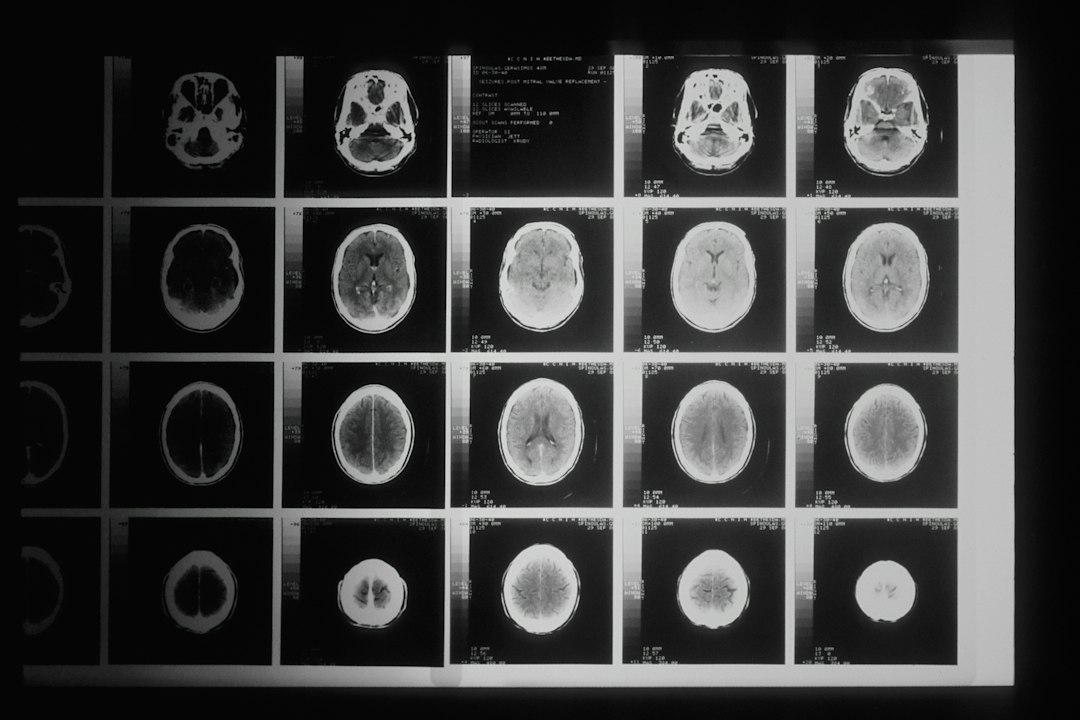
A CT scan is the first-line test for a head injury because it detects bleeding that may need surgery. A normal CT does not rule out a brain injury; the CDC notes that a brain scan is not needed to identify a mild TBI or concussion. Susceptibility-weighted imaging (SWI), an MRI sequence sensitive to blood products, has detected small hemorrhages in some mild TBI patients whose CT scans were normal (Eldeş et al., 2020).
Diffusion tensor imaging (DTI) needs more caution. A joint statement of the American College of Radiology and the American Society of Neuroradiology concluded that advanced techniques such as DTI were confined to research for group comparisons, without sufficient evidence for routine use in individual patients (Wintermark et al., AJNR, 2015). A case that rests on DTI alone should expect a defense expert to raise that point.
Neuropsychological testing
Neuropsychological tests measure learning, memory, concentration, and problem solving, and the CDC notes that a person may still have a mild TBI even if the injury does not show up on them. In litigation, testing includes performance validity measures, and one study of litigants found that performance validity explained more of the variation in scores than injury severity did (Davis et al., 2012). Early testing by a treating clinician, with validity measures passed, is harder to dispute than testing arranged years later.
Concussion settlement amounts and the mild TBI dispute
Concussion settlement amounts vary for the same reasons as any brain injury claim, but concussion cases share a predictable dispute. The defense usually argues that the CT scan was normal, that there was no loss of consciousness, or that the symptoms come from something else, such as an earlier concussion, depression, poor sleep, or medication.
The evidence that answers those arguments is mostly gathered early: EMS and emergency records documenting confusion or memory gaps, the GCS component scores, consistent symptom reports to treating providers, MRI where indicated, and testimony from family and coworkers about specific changes. Earlier injuries do not defeat a claim. Under CACI No. 3927, a defendant must compensate for a preexisting condition it made worse, and under CACI No. 3928, damages are owed “even if” the person “was more susceptible to injury than a normally healthy person would have been.”
Who the defendant is, and what coverage is available
A settlement can only be paid from insurance or assets that actually exist, so who caused the injury often shapes the value of a brain injury claim as much as the injury itself. A judgment gives the right to collect; it is not the same as being paid.
- An individual with little insurance. Many drivers carry only California’s minimum auto liability limits, $30,000 per person and $60,000 per accident for policies issued or renewed on or after January 1, 2025 (Vehicle Code § 16056). When the losses are far larger, anything beyond the policy has to come from that person’s own assets, which are often limited, and collecting a judgment beyond the coverage can be difficult. Your own underinsured motorist coverage may help close the gap.
- A business or corporate defendant. Companies often carry commercial auto, general liability, and umbrella or excess policies, and some self-insure up to certain limits. Interstate for-hire carriers hauling general freight in vehicles over 10,000 pounds must carry at least $750,000 (49 C.F.R. § 387.9). When an employee was working at the time, the employer is generally responsible (the CACI 3700 series). More coverage changes how a case is investigated and litigated, but not what has to be proven.
- More than one responsible party. A driver, an employer, a vehicle owner, a property owner, or a product manufacturer may each share responsibility and each may have separate coverage. Under Civil Code § 1431.2, each defendant’s share of non-economic damages is limited to its percentage of fault.
- A public entity. A claim against a city, county, or state agency follows the Government Claims Act and generally requires a written government claim within six months (Gov. Code § 911.2).
Identifying every responsible party and every policy early is one of the first things we do in a serious brain injury case.
Rules that reduce or limit a brain injury settlement
Amounts paid versus amounts billed
In Howell v. Hamilton Meats & Provisions, Inc. (2011) 52 Cal.4th 541, the California Supreme Court held that a plaintiff whose care was paid through private insurance may recover as past medical damages “no more than the amounts paid by the plaintiff or his or her insurer.” The rule has limits: it addresses past expenses, not future care proven through the life care plan; the jury still does not hear that insurance paid; and under Pebley v. Santa Clara Organics, LLC (2018) 22 Cal.App.5th 1266, an insured plaintiff who treats outside the plan may be treated as uninsured for this purpose.
Liens and reimbursement
Whoever paid for care may seek repayment. Medi-Cal’s rights are in Welfare and Institutions Code § 14124.70 and following, and § 14124.76 limits Medi-Cal’s recovery to the part of a settlement that represents medical expenses. Civil Code § 3040 caps many health plan liens and reduces them for attorney’s fees and comparative fault. Lien negotiation is a common reason a case takes time to close; see why a settlement can take so long in California.
California follows pure comparative negligence under Li v. Yellow Cab Co. (1975) 13 Cal.3d 804: a person’s recovery is reduced by their own share of fault but not barred. Under Civil Code § 1431.2 (Proposition 51), each defendant pays non-economic damages only in proportion to its fault, while economic damages remain joint and several, so identifying every responsible party can change what is collectible.
Uninsured and DUI drivers (Proposition 213)
In a vehicle case, Civil Code § 3333.4 (Proposition 213) generally bars non-economic damages for an injured person who was driving uninsured or was convicted of DUI for the crash, subject to exceptions.
The MICRA cap, only when a health care provider is the defendant
When a brain injury is caused by a health care provider’s professional negligence, Civil Code § 3333.2 limits non-economic damages. For non-death injury cases filed on or after January 1, 2023, the cap started at $350,000 and rises $40,000 each January 1 until it reaches $750,000, making it $470,000 for a judgment, arbitration award, or settlement in 2026. Up to three separate caps can apply, and economic damages are not capped. Related MICRA rules allow evidence of certain collateral benefits (Civil Code § 3333.1) and periodic payment of large future damages (Code of Civil Procedure § 667.7). None of this applies to a crash or fall case against a non-medical defendant.
How we build a brain injury damages case
Before founding Synergist Law, Sami spent nine years at large law firms defending companies in complex and product liability litigation, where he saw how a defense team values an injury claim: it starts with the records and looks for gaps. Sami is also a former clinical pharmacist at UCSF Medical Center, and we read the medical file the way a defense medical reviewer will, including the medication history that can affect symptoms and testing.
In practice, we get the EMS and emergency records early, because the first hours often hold the clearest evidence of the injury. We work with the treating neurologists and neuropsychologists, a credentialed life care planner, and an economist, and we document changes in daily life through the people who see them. In Osaze v. Gee, a 2026 published Court of Appeal decision in which Sami was counsel, the court held that testimony from expert witnesses about the cause of an unwitnessed fall is not necessarily speculative and should not have been excluded on that basis. Neither background predicts how a case will turn out. It shapes how we prepare one.
The same framework applies to other catastrophic injuries; see the average spinal cord injury settlement in California and the average amputation settlement in California, or our serious injury practice overview.
Información en español
Sami Sedghani habla español con fluidez. En California no existe un promedio confiable para los acuerdos por lesiones cerebrales. El valor depende de los daños que permite la ley, de la prueba médica, del seguro disponible y de los hechos de cada caso. Puede llamar al (415) 835-4448 para una consulta gratuita. Esta información es general y no constituye asesoría legal.
Tenemos una guía en español sobre casos de lesiones personales: Abogado de lesiones personales en California.
Frequently asked questions about brain injury settlements in California
What is the average brain injury settlement in California?
There is no reliable average. California has no public database of brain injury settlements, many settlements are confidential, and published results skew toward large verdicts. Value depends on the damages the law allows, the medical proof, shared fault, the available insurance, and the facts of the particular injury.
What is the average concussion settlement?
There is no reliable average concussion settlement either. Concussion claims turn on early documentation of symptoms, consistent treatment, and whether the defense can attribute symptoms to another cause. A normal CT scan does not rule out a concussion, and a prior concussion does not bar a claim for harm the defendant made worse.
Does a normal CT scan mean I do not have a brain injury claim?
No. CT is designed to find bleeding that may need urgent treatment, and the CDC notes that a scan is not needed to identify a mild TBI or concussion. Clinical findings, MRI where indicated, neuropsychological testing, and the records of treating providers can all support a claim.
Is there a cap on brain injury damages in California?
Only in medical negligence cases. For a non-death injury case against a health care provider filed on or after January 1, 2023, Civil Code § 3333.2 caps non-economic damages at $470,000 for a judgment, arbitration award, or settlement in 2026, rising $40,000 each January 1 until it reaches $750,000. Economic damages are not capped, and MICRA does not apply to a car crash or fall case against a non-medical defendant.
Who prepares the life care plan in a brain injury case?
A credentialed life care planner, working with the treating physicians and therapists, prepares the life care plan. It sets out the future care the injured person is expected to need and its cost. An economist then reduces those future costs to present value.
Does it matter who caused the brain injury?
Yes. A settlement is paid from insurance or assets that actually exist, so the defendant’s coverage often matters as much as the injury. An individual driver may carry only California’s minimum of $30,000 per person, and collecting more than the policy from personal assets can be difficult. A business or corporate defendant may have commercial, umbrella, or excess coverage or may self-insure up to certain limits. Your own underinsured motorist coverage may also apply.
How long do I have to file a brain injury claim in California?
The general deadline for a personal injury lawsuit is two years under Code of Civil Procedure § 335.1. A claim against a public entity generally requires a written government claim within six months under Government Code § 911.2. Medical negligence claims follow Code of Civil Procedure § 340.5, and Code of Civil Procedure § 352 can pause some deadlines for minors. Because the deadline depends on the facts, it is better to have a licensed California attorney determine the deadline that applies than to calculate it yourself.
Talk to a Marin County brain injury lawyer
If you or a family member suffered a brain injury in Marin County or elsewhere in California, we can review what happened, the medical records, the insurance that may apply, and the deadlines in your case. Call (415) 835-4448 or request a free consultation. Se habla español. Office: 1299 4th Street, Suite 301, San Rafael, CA 94901. You can also read more about our California traumatic brain injury practice, or see our California personal injury FAQ for more questions and answers.
Contingency fee: no attorney’s fee unless we obtain a recovery for you. Depending on the terms of your written fee agreement, you may be responsible for case costs we advance even if there is no recovery. Your fee agreement explains this before representation begins.
The law described here may change after the date shown above. Every case turns on its own facts, and nothing on this page predicts any outcome, timeline, or value in your matter.
